Showing posts with label shooting. Show all posts

Tuesday, 7 November 2017

Coming to a screen near you,.....How much would you miss birdsong? An invitation from RSPB Liverpool

Messenger promotion image

Heads up all members and bird friends.

RSPB Liverpool  are happy to announce that we are hosting a screening of a stunning and thought provoking film called The Messenger.  To be screened at the Picturehouse @ FACT cinema in Liverpool on Sunday 26 November 1pm . Rated PG, running time 90 minutes. 

All ticket holders will be entered into a raffle on the day including some goodie bags from the bird friendly coffee producers  https://birdandwild.co.uk/


After the screening all viewers are welcome to join the group in the cafe for an informal ‘ornithological social’  for anyone who wants to talk about the film, the issues it raises and more generally to find out  about the  RSPB’s activities in the area etc.

Tickets  available now from fact:

 Picturehouses - Cinema information for Picturehouse At Fact


Box office Number : 0871 902 5737


Intrigued?:
The Messenger is an essential film for anyone who cares about the environment and nature and full of insights and revelations for all audiences. It explores mankind’s deep-seated connection to songbirds and the devastating impact humans have had on bird species, from urbanisation, climate change and pesticides. 

Filmed across three continents The Messenger extends us a ‘birds’-eye view’ to offer fresh glimpses into epic migratory journeys while chronicling the struggle of songbirds worldwide to survive in turbulent environmental conditions. As scientists, activists and bird enthusiasts investigate this phenomenon, amazing secrets of the bird world come to light for the first time while beautiful slow motion photography illustrates the power and beauty of these delicate winged creatures.

The Messenger leaves viewers with a profound appreciation for the billions of birds with whom we share our communities and our planet – and with hope for our collective ability to turn the tide.  

Here’s a link to watch the trailer: https://youtu.be/LjQtRr4CKc

Messenger promotion image

Mark Avery (ex RSPB Conservation Director) : The Messenger is about the threats faced by songbirds – not just in the US and Canada but also in Europe and elsewhere.
It’s a good film and non-birders will probably find it just as compelling as those who, like me, sat through it with a self-generated commentary in their heads of bird names as different species appeared in view or in song.
There are some beautiful, and pretty much unique, images of birds in flight (taken in wind tunnels) and a lot of them in the wild too.  It is a vivid reminder of the fact that birds really are simply stunning – visually, vocally and because of the feats of migration they accomplish.
But life is tough for birds. The film started with issues and impacts such as collisions with buildings – probably a bigger issue in the US than in Europe (?) – but it moved on through trapping to the bigger issues of pesticides, land use and climate change. A lot of ground to cover (just like a migratory bird) but the film brought it home.
Hope to see you all there.....

Sunday, 5 November 2017

Report reveals continued persecution of birds of prey in Lancashire

Shot Hen Harrier Rowan - RSPB Images


·         RSPB’s Birdcrime report reveals a minimum of 81 confirmed incidents of bird of prey persecution in the UK during 2016.
·         Despite this, there were no prosecutions for these persecution offences, the first time this has happened in 30 years.
·         Illegal killing is not only robbing people of the chance to see birds of prey in the UK but has serious consequences for their populations.
·         The RSPB is calling for police and other enforcing authorities to make full use of all existing powers to protect birds of prey as well as the introduction of a licensing system for driven grouse shooting to ensure shoots are operating legally and sustainably.
 
Without urgent action some of UK’s birds of prey face a bleak future after the latest Birdcrime report revealed 81 confirmed incidents of illegal raptor persecution in 2016, without a single person prosecuted.
 
Birdcrime 2016 – the only report summarising offences against birds of prey in the UK – revealed 40 shooting, 22 poisoning, 15 trapping and four other incidents of illegal persecution against raptors. Among the victims were hen harriers, peregrine falcons, red kites and buzzards. However, evidence suggests these figures are just the tip of the iceberg with many illegal killings going undetected or unreported.
 
The report revealed that close to two-thirds (53) of the confirmed incidents took place in England. In Lancashire confirmed incidents included a shot peregrine, a shot kestrel and an illegally trapped peregrine.
 
People in Lancashire and across the UK have been robbed of the chance to see these spectacular birds because of these illegal incidents, yet there wasn’t a single prosecution related to them – the first time this has happened in 30 years.
 
Martin Harper, RSPB Conservation Director, said: “Birds of prey bring our skies to life. There is nothing like seeing a diving peregrine or a skydancing hen harrier. The sights of these spectacular birds are something we should all be able to enjoy, unfortunately illegal activity is robbing us of this and preventing them from flourishing. There are laws in place to protect these birds but they are clearly not being put into action. We need governments across the UK to do more to tackle the illegal killing to protect our raptors for future generations to enjoy.”
 
Previous research has shown that illegal killing of birds of prey is associated with land managed for intensive driven grouse shooting, leaving vast areas of our uplands without raptors. A Natural England report revealed ‘compelling evidence’ that persecution of hen harriers – associated with driven grouse moors - was the main factor limiting their recovery in England 
 
The RSPB believes the introduction of a licensing system for driven grouse shooting would help tackle the ongoing illegal persecution that occurs on these grouse moors. This would also help tackle the wider problems of intensive management of ‘big bag’ driven grouse shooting, like the draining of and burning on fragile peat bogsA fair set of rules in the form of a licensing system could help ensure shoots are operating legally and sustainably and introduce the option of restricting or removing a licence in response to the most serious offences, for example where staff on an estate have been convicted of illegally killing birds of prey.
 
The RSPB welcomes a recent announcement by Scottish Government that will see an independent panel established to review options for regulation of grouse shooting and to look at the economic and environmental costs and benefits of the industry.
 
Bob Elliot, RSPB Head of Investigations, said: “This latest Birdcrime report continues to highlight that in the UK we have a major issue with birds of prey being deliberately and illegally killed, despite having full legal protection. This type of crime has serious consequences for the populations of species, such as the hen harrier, and we must see a change in attitude and more effective law enforcement to protect these birds for years to come.”
 
For the full copy of Birdcrime 2016 report summarising the extent of illegal persecution offences against birds of prey in the UK, visit www.rspb.org.uk/birdcrime.


  Birdcrime is a unique publication. It is the only centralized source of incident data for wild bird crime in the UK. The RSPB does not record all categories of wild bird crime. Instead we focus on recording crimes that affect the conservation status of species, such as bird of prey persecution and threats to rare breeding birds.
 
UK breakdown of the 81 confirmed raptor persecution incidents:
·         40 confirmed shooting incidents
·         22 confirmed poison abuse incidents
·         15 confirmed trapping incidents
·         3 confirmed other persecution incidents
·         1 confirmed nest destruction incident


Country breakdown of 81 confirmed raptor persecution incidents:
·         England 53 confirmed incidents (65%)
·         Wales 13 confirmed incidents (16%)
·         Scotland 9 confirmed incidents (11%)
·         Northern Ireland 6 confirmed incidents (7%)


A future for the Hen Harrier in England? A report by Natural England: http://publications.naturalengland.org.uk/file/81030


  All birds of prey have been protected since the 1954 Protection of Birds Act (except for the sparrowhawk which received protection in 1961).
 
The Wildlife and Countryside Act 1981 is the primary legislation which protects animals, plants and certain habitats in the  UK. Under the act all wild birds, their nests and eggs are protected.
 
 Reporting a wildlife crime:

Crimes against wildlife should be reported to the local police via the 101 number. Crimes against wild birds can also be reported to the RSPB online or by calling the RSPB. 

If you have any sensitive information about the illegal killing of birds of prey, please report it by calling the RSPB’s confidential hotline on 0845 466 3636. Calls to this number are not recorded and will be treated in the strictest confidence.

Monday, 10 July 2017

Conservationists alarmed by killing of protected birds in Lancashire

·         Large numbers of a protected bird killed on a grouse moor
·         RSPB calls on Natural England to take urgent action

The RSPB has learned that large numbers of protected birds are being killed on a grouse moor in Lancashire.

A RSPB staff member working in the Bowland area discovered two estate workers shooting nesting lesser black-backed gulls - on a grouse moor managed by the Abbeystead Estate - leaving their chicks to be either killed by dogs or left to starve. 

Lesser blacked-backed gulls have been nesting on the moors of Lancashire for more than 80 years. The recovering colony in Bowland is one of the most important in the UK and is protected under British and European law, having once been in excess of 20,000 pairs. Lesser blacked-backed gulls are declining across the UK and the RSPB is becoming increasing worried about their future in the UK. 

This species can only be legally culled if they pose a threat to human health, risk spreading disease or are having a negative effect on other species of conservation concern. The RSPB understands Natural England - the government agency for responsible for protecting the countryside – granted consent for the cull. But while the nature conservation organisation has repeatedly asked Natural England for scientific evidence which would justify a cull, none has been forthcoming. 

Although the RSPB has yet to see the full details of the consent, it has reason to believe that the landowner may have breached both the letter and the spirit of the agreement, and is calling on Natural England to investigate the matter urgently. 

Graham Jones, RSPB Conservation Area Manager for North West England, said: “We are devastated that this cull of a protected species has been taking place, apparently without any justification. 

“Although it may occasionally be necessary to cull a small number of large gulls for conservation and health reasons, there is absolutely no evidence to support it in this case.

“We want Natural England to tell us why they think the gulls at Bowland met the legal criteria for a cull and also want them look into whether the terms of an already flawed agreement have been broken.

“Bowland should be a safe place for this declining species and Natural England should be focussing on helping the colony’s recovery.”

“We believe the only reason these protected birds are being killed is simply to satisfy the requirements resulting from the ongoing unsustainable approach to grouse moor management.”

Tuesday, 28 July 2015

Wavering about joining us at Hen Harrier day? Message from Mark


Hi!

The Hen Harrier is a threatened bird of prey. In the UK it faces heavy persecution by shooting interests because Hen Harriers eat Red Grouse that shooters want to shoot.  There should be 2600 pairs of Hen Harrier in the UK (including c330 in England), say scientists, but there are just 600-800 (only 4 pairs last year in England).

Here are three things you can do to help the Hen Harrier - and also a way you can find out much more about Hen Harriers and the grouse shooting industry.

1. Come to a Hen Harrier Day rally on Sunday 9 August. Several are planned, from Arne in Dorset to Mull and Perthshire in Scotland. I'll be attending what is likely to be the biggest rally, with Chris Packham, in the Goyt Valley near Buxton in Derbyshire. Full details from this website.

2. If you can't attend a rally (and even if you can) then add your voice to a social media thunderclap if you use Twitter, Facebook or tumblr. This thunderclap, which will send the simple message 'We're missing our Hen Harriers - we want them back!' is supported by the RSPB, the Wildlife Trusts, Chris Packham, the League Against Cruel Sports, the British Mountaineering Council and many others. Around 3.5million people will get this simple message through social media on Hen Harrier Day and you can add your voice by clicking here.

3. Add your signature to my e-petition to ban driven grouse shooting. This is a re-run of last year's highly supported e-petition which highlighted the issue. This year over 5,500 people have signed in less than a week - when we reach 10,000 signatures the Westminster government must respond.


And if you would like to learn much more about this issue - wildlife crime in the UK uplands, what grouse shooting is all about, habitat damage caused by heather burning, the economic costs of grouse shooting and what you can do to help, then my latest book Inglorious - conflict in the uplands is published this week and will guide you through the issues. Click here for details.

Many thanks for your support

Dr Mark Avery
 
@MarkAvery

http://markavery.info/blog/


Tuesday, 21 July 2015

RSPB-led study reveals extent of upland burning across Britain

Burning found in over half of conservation areas assessed
Peat bog wetland


A new study led by the RSPB Centre for Conservation Science has revealed the extent of moorland burning across Britain’s upland areas. Burning on moorlands, a mixture of bog and heath habitats, is widely used to increase the numbers of red grouse that are available for recreational shooting. 

Burning was detected in 55 per cent of Special Areas of Conservation (SACs) and 63 per cent of Special Protection Areas (SPAs) assessed in the study, and significantly more burning took place within them than on comparable moorlands outside. These sites are designated under EU legislation for their conservation importance, and governments are charged with protecting them from damage and ensuring that they are restored to the best condition. However, many SACs and SPAs are in unfavourable condition, with burning identified by governments and statutory agencies as a primary reason for this poor status.

Dr David Douglas, Senior Conservation Scientist at RSPB Scotland and lead author of the study said: “Upland ecosystems are highly sensitive to burning practices. Knowing how much burning takes place and where is crucial to developing sustainable land management policies for these precious environments.”

This study, published in Biological Conservation, is the first time upland burning has been mapped in detail across mainland Britain. Using aerial photography and satellite images, 45,000 1-km squares were mapped across Scotland, England and Wales, and revealed that burning occurred across 8551 of these squares. In the ten year period covered by the study from 2001 to 2011, the number of burns recorded increased rapidly by 11 per cent each year. Other studies have found that the potential number of red grouse shooting days in some areas of Britain has risen over a similar period, and moorland management has also intensified.
Red grouse


In Scotland and England, a third of burning took place on deep peat soils, an important carbon store. The UK has 10-15 per cent of the world’s blanket bog peatlands. Locking in 3.2 billion tonnes of carbon[1], this deep peat in the uplands is the largest carbon store in the UK[2]. Upland areas are also a vital water source, supplying around 70 per cent of our drinking water[3]. Burning has been linked to poor water quality in these areas, requiring large sums of money to treat the water.

Martin Harper, Director of Conservation at RSPB said: “Our uplands are amongst our most precious habitats in Britain and home to important wildlife. However, many of our uplands are in poor condition, due to intensive land management practices. It’s very worrying that burning is increasing, given the damage it can cause and that it occurs in many of our conservation areas.

“Governments and statutory agencies across Britain need to take action to reduce burning in our uplands rather than allowing them to be increasingly damaged year on year.  Although their regulations already advise against burning on blanket bog it is often used on these areas with their consent. These regulations need to be strongly enforced so that uplands are properly protected against this damaging practice.”


[1] The amount of carbon stored in the UK’s blanket bogs is detailed in the 2011 “IUCN UK Commission of Inquiry on Peatlands.”

[2] The size of the UK’s blanket bog as a carbon store is contain in the 2012 study “A GIS based MCE model for identifying water colour generation potential in UK upland drinking water supply catchments.”

[3] The amount of UK drinking water from upland areas is detailed in the 2001 study “Long term variation in water colour from Yorkshire catchments.”


Thursday, 30 October 2014

RSPB issues challenge to shooting community as illegal bird of prey killing continues in Lancashire

Hen Harrier fledgling Sky - now missing

Illegal persecution continues to deprive the Lancashire countryside of our native birds of prey and the RSPB is challenging leaders in the shooting community to acknowledge this and take real action to stop the killing.
Birdcrime 2013 reveals 164 reports in the UK of shooting and destruction of birds of prey including confirmed shooting of two hen harriers, two marsh harriers, five peregrines and 28 buzzards. It also included 74 reported incidents of wildlife poisoning and pesticide-related offences. Confirmed victims of poisoning include 30 buzzards, 20 red kites, a golden eagle and a white-tailed eagle. These figures are believed to represent only a fraction of the illegal persecution in the UK, with many incidents thought to be going undetected and unreported.

Lancashire is one of the worst counties in England for bird of prey persecution. In January 2013 a dog walker discovered a peregrine near Preston that had been shot in its wing. In October, a dead buzzard in the Lancaster area was found with four shotgun pellets lodged in its body.

Birdcrime 2013 marks four years since over 230,000 people signed an RSPB pledge which was handed in to the UK Government, asking for action to put an end to bird of prey persecution. However, in the four years since around 560 birds of prey have been confirmed shot or destroyed. Public outrage has continued to grow in response to the recent horror of mass poisoning events, such as the 11 birds of prey poisoned by a gamekeeper in Norfolk in 2013, and the 16 red kites and 6 buzzards killed in Ross-shire earlier this year. There is no sign to this carnage ending.

Martin Harper, the RSPB’s conservation director, said: “Witnessing a hen harrier’s dramatic skydancing display flight, or seeing the world’s fastest animal in action as a peregrine stoops over the moors is enough to take your breath away. These are sights that we should all be able to enjoy. Unfortunately, we are being robbed of the chance to see these beautiful birds flourish because of illegal persecution.”
Anne Selby, Chief Executive of The Wildlife Trust for Lancashire, Manchester and North Merseyside, said: "It is worrying to read the Birdcrime report and to hear that Lancashire is among the worst counties for bird of prey persecution.  The report again proves that some individuals have little regard for our wildlife. It it is important to highlight the crimes they are committing and to ensure that prosecutions are given publicity so that nature lovers can remain vigilant.  
"Lancashire Wildlife Trust fully supports the work of the RSPB in helping to combat bird crime. The North West region is vitally important for all species of bird from the smallest wren to the largest raptors and wildfowl. It is vital that we all work together to protect our wildlife."
The RSPB is doing more than ever to help birds of prey, including satellite tracking threatened species, protecting their nests, monitoring and undertaking research, raising awareness among the public of the problems faced by these birds, and working with others to stop persecution. Tackling wildlife crime requires a joint approach but condemnation from organizations representing the shooting community is not resulting in a widespread reduction in illegal persecution.


More action is needed in the uplands of England, where illegal persecution associated with grouse moors suppresses the population of several bird of prey species. Attempts to bring about change through self-regulation have proved ineffective and tough decisions are needed to combat these crimes.

Martin Harper added: “Awareness of illegal persecution is increasing. This year we have seen people taking to the streets to demonstrate against the killing of these birds, and hundreds of people joined rallies in northern England in support of Hen Harrier Day. This shows that public desire for the return of our cherished birds of prey populations is at an all time high and we will continue our efforts to highlight this to the shooting community and DEFRA.

“Illegal persecution has tarnished the beauty of our uplands for decades and continues to do so to this day. The RSPB challenges members of the shooting community to acknowledge that illegal persecution is a problem within the industry and that a change of attitude is needed in order to make a serious and effective effort to finally consign bird of prey persecution to the history books.”

In the uplands of England, the grouse shooting industry must demonstrate they can operate in harmony with birds of prey and help restore the environmental quality of our hills, which is why the RSPB believes it is time to regulate the industry through the introduction of robust licensing system for driven grouse moor shooting.
Hen harrier day mascot


Furthermore the RSPB believes that tougher legislation is needed to punish employers who turn a blind eye to staff committing wildlife crimes and are calling on the government to introduce the provision of vicarious liability, where employers would be legally responsible for the wildlife crimes committed by their employees.

“The RSPB supports the licensing of grouse moors and the introduction of vicarious liability as we believe these measures could address the low levels of detection and weak deterrents which currently allow these crimes to continue.

“We will also continue our efforts to work any organisations that represent the shooting community and who actively oppose the illegal persecution of birds of prey.  Equally, we urge DEFRA to ensure the promised hen harrier recovery plan is robust and will drive hen harrier recovery by tackling the root cause of its decline: illegal persecution. Effective leadership is needed to end to illegal persecution, but there is little evidence in Birdcrime 2013 to build public confidence that this is happening”

RSPB Hen Harrier of peace

For further information and to arrange an interview, please contact:
Chris Collett, Regional Communications Manager, 0191 233 4317 / 07885 834889 (Wednesday 29 October only)

Grahame Madge, Senior Media Officer (Conservation and Policy):01767 693221 Out of hours: 07702 196902.

http://liverpoolrspb.blogspot.co.uk/2014/09/gone-girls-threatened-birds-of-prey.html

http://liverpoolrspb.blogspot.co.uk/2014/08/hen-harrier-day.html

Wednesday, 13 August 2014

HEN HARRIER DAY


SAVE OUR  SKYDANCERS  -  SAVE OUR HEN HARRIERS.
BAN DRIVEN GROUSE SHOOTING
HELP MAKE A DIFFERENCE
SIGN THE PETITION

“First they will ignore you, then they will laugh at you, then they will fight you, then you will win.”
                       Gandhi (Quoted by Chris Packham, Hen Harrier day 10/08/14)


The inglorious twelfth has dawned but the fight goes on.


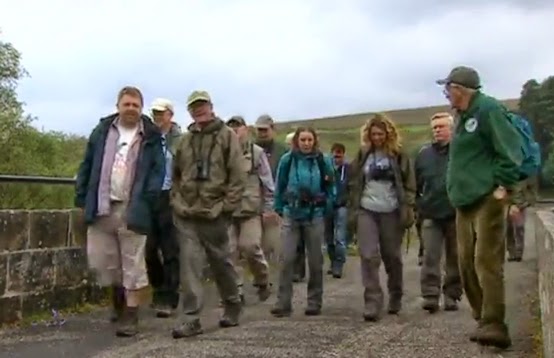
Members of Liverpool RSPB braved the wrath hurricane Big Bertha along with hundreds of others to support the Hen Harrier day.  
Dunsop Bridge protest
A soggy but inspiring day at Dunsop Bridge .  Terry from the Northwest Raptor Group gave us a talk on the persecution of raptors in the Bowland area, maddening tales of shot adults and ‘trodden into the ground’ chicks, and not just Harriers, Peregrines and the sad tale of the Bowland Goshawk, stopped from nesting in at tree, chose to nest on the ground…returning conservationists checking on it, found the nest trashed, eggs smashed, adult  shot dead.


Terry and Andrea made it to Northumberland to protest  
Northumberland protest


Lots of info on the internet, lots of pics from the  3 protest sites on twitter 


MARK AVERY & CHRIS PACKHAM

Watch an extended version of the Hen Harrier video, more footage form Chris Packham explaining why.....


http://www.rspb.org.uk/community/ourwork/b/investigations/archive/2014/08/10/singing-in-the-rain.aspx


Findley Wilde's H Harrier

Findlay Wilde  @WildeAboutBirds


 http://wildeaboutbirds.blogspot.co.uk/2014/08/10th-august-hen-harrier-day.html
AN INSPIRING YOUNG MAN