Showing posts with label RSPB liverpool. Show all posts

Friday, 22 September 2023

Easyfundraising

Hi All,

Just a reminder that RSPB Liverpool are on the easyfundraising site . So if you regularly order stuff on-line, check it out and help your group raise some funds.

We turn your daily shopping into every day magic!

easyfundraising partners with over 7,500 brands who will donate part of what you spend to a cause of your choice. It won't cost you any extra. The cost is covered by the brand.


If you go on the website then select 'RSPB Liverpool cause' to then link to the websites you want… there is no reason to buy anything if you don't need it but just incase you do then please use the link below.

So far the donation to the group is £396.961👍😁 something back off the retailers.

Stay safe and well , hope to meet up with you all soon.

Chris

Friday, 6 May 2022

Liverpool RSPB’s 2022 AGM 50th anniversary year- Anyone for cake?


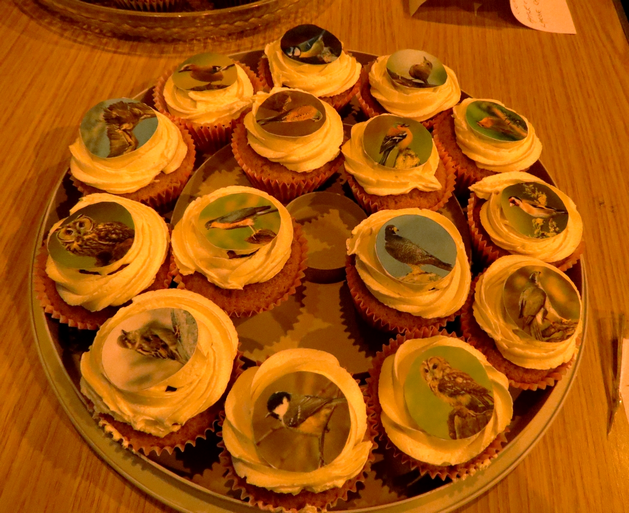
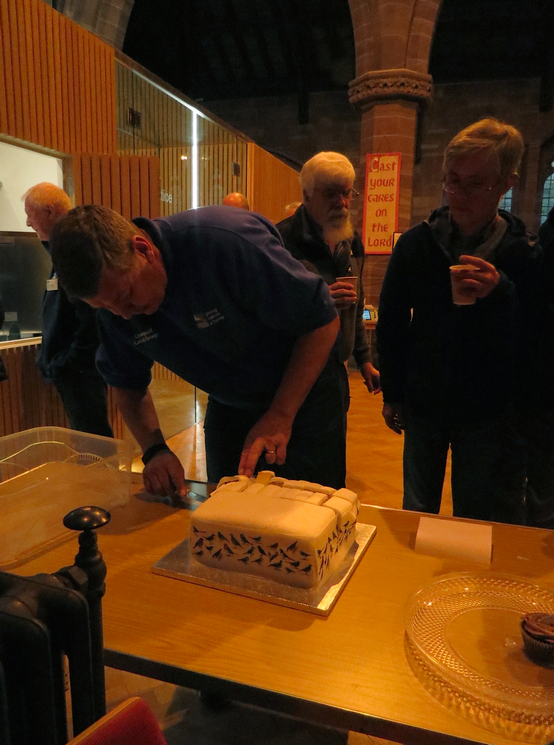
Liverpool RSPB’s 2022 AGM was a special evening, as it’s our 50th anniversary year, and quite rightly we celebrated with cake or should I say cakes. Local group member Anne Ludwig did us proud with 50 bird themed cupcakes and a large iced, layered sponge cake that Chris had the task of slicing up; also ensuring he had first dibs!


We also have 50 specially commissioned nest boxes, engraved with 'RSPB Liverpool 50yrs Giving Nature a Home', stock sold out on the night but more available on request.


Fifty nine of our members attended the meeting. Chris gave a Leaders report of the recent year’s activities and our future events. We went through the business of re-electing committee members, explaining expenditure and the group’s donation of £1500 to the Gough seabird appeal  (https://www.rspb.org.uk/our-work/conservation/projects/gough-island-restoration-programme/  All attending were given the opportunity to ask questions, make requests or share ideas.

Alasdair McKee, the RSPB'S Local Groups Officer followed giving an expression of thanks for all Liverpool RSPB do from RSPB HQ and then went on to  regale us with snippets from Bird Notes & News, the original RSPB newsletter-
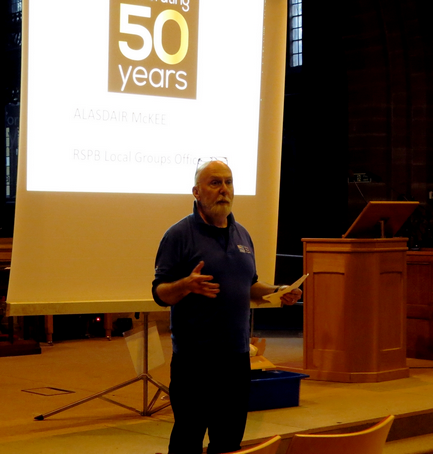
Alisdair Mckee


Did you know loathsome bird catching (still going on in the Mediterranean today sadly) was a general practice among English people in days past; for eating, plumage or entertainment?  Cage birds,nets and the abhorrent bird lime was freely advertised and songbirds were sold in big stores as food including skylarks  and fieldfares in season, and  the Southport  gun club, regularly held  starling shoots.

But all was not lost, in 1889, sickened by a slaughter of exotic birds for their feathers; Emily Williamson started the Society for the Protection of Birds aiming to campaign for change. 

I’m pleased to say our  neck of the woods played its part; In 1903 twenty  of the leading millinery firms in Southport held a  display show of plume free millinery at the RSPB Southport Branch and for 2 days in April their shop windows  were full of this trimmed millinery with the card ‘Without destruction to wildlife’… well done.

After campaigning tirelessly for change, the plumage (prohibition) Act was passed in July 1921, banning the import of plumage.  And Liverpool led the way in 1922, Liverpool succeeded in obtaining the first order issued in England protecting all wild birds throughout the year expressly to stop bird catching in the suburbs in the open season, congratulations to the Liverpool branch of the RSPCA and RSPB.


So what did Chris convey –?

The New RSPB website will be coming online shortly; in the meantime, the old site is still accessible showing details of future events.

Our peregrines, sited in the tower of Mossley Hill Church are doing well, and are expectant parents of 3. Male has been named Bruno, his lass is a girl from the midlands (ringed peregrine).

Chris liaising with RSPB HQ, and assisted by other local group members have been discussing and attempting to find solutions to the on-going problems of Liverpool’s netted high buildings, such as the Anglican Cathedral and Tobacco warehouse. These buildings have been netted for various reasons to stop Peregrines from breeding on them; to many a distressing situation and sadly not an uncommon practice throughout the country and often in the news. 

The RSPB resumed outdoor events in January. Our first being a replacement walk around Sefton Park, normally the group holds a ‘Big garden birdwatch’ event in the Palm House in January. To say it was popular was an understatement as approximately 80 people followed Chris along the paths; A mixture of regular members and those newly interested, several on the walk went on to the join the group and have  been out with us again.

Chris Tynan. RSPB Liverpool Jan 2022 Sefton Pk


Chris has been working with the NHS’s nature recovery rangers. Covering Aintree, broadgreen and the royal hospitals, a series of short local woodland health walks is what’s prescribed, in the fresh air embracing nature, connecting to green spaces to benefit their mental and physical health. Every hospital should have a ranger - https://www.youtube.com/watch?v=VKz7x2tjC6w&ab_channel=TheCentreforSustainableHealthcare


RSPB Liverpool will be on board for the two Birdwatching ferry cruises planned this year 16th July and 11rh of September. (Ticket Prices Adults - £20, Children aged (3-15) - £10)

https://www.merseyferries.co.uk/our-cruises/wildlife/bird-watching-cruises/#timetable-grid


Chris joined RSPB Liverpool in 1996, within a few years he was group leader.  In 2003 he was working for the RSPB on Southport pier, a testament to his skills in talking to, sharing his knowledge and enthusing the public about why birds were brilliant.  In 2018, Chris Tynan received the RSPB Presidents Award. The President’s award is given to 5 volunteers every year to highlight outstanding volunteering. Chris says birdwatching and carrying on with our group's leadership is what keeps him going, but warns someday we’ll need a replacement, yikes.
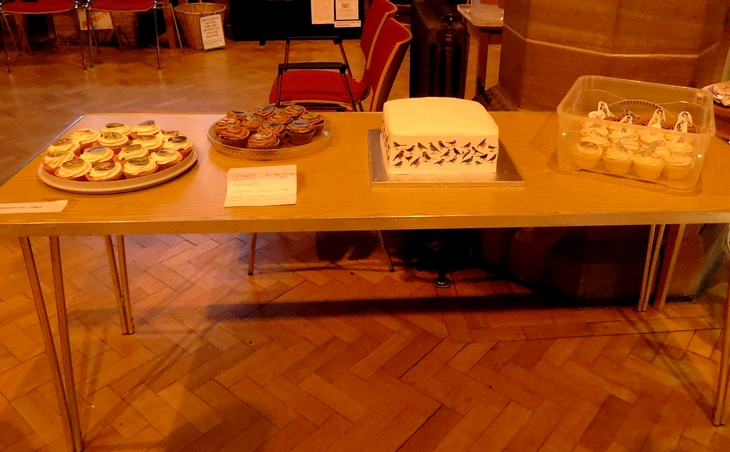


Well done local group member  Anne Ludwig, delicious


Cake ate or secreted away...Our meeting concluded with a talk from Chris about his favourite 50. His first recollected interest being inspired by blue tits, who were famed for sipping the cream out of the tops of doorstep milk bottles!

He told of magic moments at home, of adventures abroad and exotic locations, favourites from garden, woodland or sea, of agonising dipped birds. All had a memory attached, the bird or even the circumstances in which it was found.  I could list the birds, but that would be a spoiler for those who missed the talk, but might like to hear it in the future… from the Mersey Oystercatchers to the New Zealand little Blue Penguins, his list was an education in itself.


Laura

Wednesday, 10 March 2021

Exciting times ahead with the - RSPB Liverpool Peregrine Project

One of Liverpool's Peregrine Falcons 


The peregrine is a large and powerful falcon. It has long, broad, pointed wings and a relatively short tail. It is blue-grey above, with a blackish top of the head and an obvious black 'moustache' that contrasts with its white face. Its breast is finely barred. It is swift and agile in flight, chasing prey.


The strongholds of the breeding birds in the UK are the uplands of the north and west and rocky seacoasts. Peregrines were at a low point in the 1960s due to human persecution and the impact of pesticides in the food chain. Improved legislation and protection has helped the birds to recover and they have now expanded into many urban areas.

However, they are still persecuted - birds are illegally killed to prevent predation on game birds and racing pigeons. They also have eggs and chicks taken for collections and falconry. Peregrines are a Schedule 1 listed species of The Wildlife and Countryside Act.
 
Peregrine's in the last 20 years have become town centres birds. Finding buildings like Cathedrals, churches or shopping centres as new nesting places. Cities have also become great places for finding lots of prey species. 

Follow the trials and tribulations of a Liverpool nesting pair who have had huge support off RSPB Liverpool.

👀So make a note in your diary - Wednesday  17th   March  7:00 pm.

https://us02web.zoom.us/j/86497283450?pwd=clhSVDBwaTFEK09tT21WQmZZQWJNZz09

For joining details /passcode. 
Please email RSPB Group Leader Chris Tynan  -christtynan@aol.com 

Follow our birds on Twitter - https://twitter.com/LpoolPeregrines
Follow our birds on Ytube https://www.youtube.com/channel/UCg3HpwTJIw6Qf9DEnKf4Dkw

Wednesday, 29 April 2020

Gull observation Q & A


We had an interesting question from one of our members recently, and thought we would share our answer on the blog.


QUESTION

Hi, I hope you are keeping well and safe in these awful days of coronavirus.
With this enforced isolation at home I have been looking out of our waterfront window over Brunswick Dock a lot more taking pleasure in observing birds and their behaviour. I have noticed in the early to late evening there is a steady stream of many herring gulls flying back along the waterfront from the direction of the estuary.
I’m presuming they are flying back inland from feeding in the estuary but I wonder where are they going and for what reason. I also wonder why these gulls would maybe go fishing as I perhaps see them in the city as urban gulls scavenging and eating the leftovers from the public; much easier pickings but maybe not since the coronavirus with few people on the streets and the fast food outlets and restaurants closed. However, I have observed this migration behaviour since I came to live here two years ago.
Could you or anyone at RSPB Liverpool throw any light on this? I must admit I am getting very interested in watching gulls and their behaviour recently. 
Finally can you or anyone recommend a good book on European gulls?
Thanks and regards
Jerry


ANSWER

Hi Jerry,
Gulls are a very interesting subject. For starters, the big gulls we see around town and the estuary are mostly herring gull and lesser black-backed gulls. Lots of our black-headed gulls have moved to breeding sites, and common gulls have moved back to northern Scotland and northern Europe.
These large gulls used to breed on the Ribble marsh or further north on Walney Island, but in the last two decades these clever birds have realised that we humans waste so much food, throw it on the floor, etc., and of course there's the rise of the large landfill sites. Gulls aren't really fishers; they are more looking for worms in fields, especially when it rains, small mammals, and anything we throw away.
At the present moment in time, the gulls will be surprised by us humans' change of behaviour, where town centres have become ghost towns and free handouts have disappeared. Both herring and LBB gulls take four years to go from being born to be classed as adults, and they can live till they are 30 years old!
The reason for the movement back up the estuary is dependent on two things. Where the tide is has a great effect on the birds as they will be happy to roost on the sand bars on low tide. Secondly, the Mersey marshes by the Manchester Ship Canal allow the birds to access the last landfill site we have, at Gowy near Ellesmere Port, and if you drive down the M56 in the winter you can sometimes see 10 to 30,000 gulls in the area.
As for a good book, then Gulls of the World, a photographic guide, is good. In the UK we get a number of different gulls but our five common species are great black-backed, lesser black-backed, herring, common and black-headed. Mediterranean gulls appear at Otterspool; there was an Iceland gull at Sefton Park last year; glaucous gulls, the world's biggest gull, are occasionally seen in the area; Kittiwakes can be spotted on the Mersey; and, recently yellow-legged gulls. Some American gulls have made it to the North West as well.
I hope this helps
Chris Tynan
Leader
RSPB Liverpool Local group


REPLY

Hi Chris
Thanks very much for that very interesting information and take on the gulls of Merseyside. I am finding that gulls in general are such interesting birds but herring gulls are very successful in our area, and they and their behaviour particularly fascinate me.
Even when shopping in Liverpool city centre, I watch them patrolling the main shopping thoroughfares such as  Church Street, turning their heads towards every side street, right and left, seeking our fast-food leftovers as they pick strategic high spots to watch us closely. Easy pickings for a highly adaptive bird. My mum in Crosby marvels at how there are none in sight but as soon as she throws bacon rind in the garden a couple almost immediately come down from goodness knows where. Is that phenomenal sight or smell or both? Incredible.
I hate it when the newspapers give these birds a bad press. It’s the public who should be admonished! I understand that herring gulls are disappearing around our coasts, so I consider myself very lucky to have so many of them and lesser black-backed gulls here around my home. Looking out over Brunswick Dock today whilst on the phone, I spotted a great black-backed gull flying majestically by. What a huge bird!
Thanks also for the book recommendations.


Sunday, 16 February 2020

Mini Merseyside Big Garden Birdwatch count 2020


This was our fifth mini Big Garden birdwatch, having started our recordings in 2016. This year 35 sites were observed in our count, mainly gardens with a few parks. A total of 966 individuals, and 40 different species were reported seen.
As our recording sites differ from year to year it can be difficult to ascertain changes in bird population but some things remain fairly constant and that is once again robin, blackbird and bluetit were the species most seen in our gardens; And those with the highest number of individuals seen at any one time were the flocks of goldfinches, starlings and in the last 3 yrs house sparrows. No Parakeets were recorded this year? some would say a good thing!  And no reports of rare birds dropping in, unlike last year’s lovely brambling.
It’s nice to see blackcaps are still being seen in our winter gardens, having been counted every year since 2016, with goldcrests 4 of 5yrs. Sadly our song and mistle thrushes are scarce, 2016 being the highest count for song thrush at 8 in 4 sites now down to 2 in 1 or 2 sites.  Red listed starlings appear to be on a downward trend, with 139 in 2016 and 91 this year.  Happily fellow red listed house sparrows appear to be on the up, year on year increases from 64 in 2016 to 110 this year.

RED, AMBER GREEN

Last year’s results:


For those of you who have enjoyed taking part in the Big Garden Birdwatch and would like to record more, please consider joining the BTO Garden BirdWatch , this will involve you recording your birds every week and uploading them to the BTO website. The count includes other nature sightings such as insects and  mammals and also records the type of food you put out, more recently they have included your sightings of diseased and dead specimens.


Many thanks to all those who took part in our little survey, I hope you find it of interest. Please free to add your comments and observations, on our blog.

SPECIES
TOT No’s of birds seen
RANK
By No’s seen
RANK
By Gdns seen in
No’s of Gdns seen in
BLACKBIRD
62
6
2nd
28
WREN
9
16
14
8
BLUE TIT
83
4
3rd
27
GREAT TIT
56
7
4
25
COAL TIT
14
13
12
10
LNG TD TIT
43
10
11
12
ROBIN
49
9j
1st
29
BLACKCAP
2
20j
19j
2
STARLING     R
91
3rd
13j
9
DUNNOCK     A
28
12j
7
19
HOUSE SPARROW     R
110
2nd
10
13
FERAL PIGEON
65
5
13j
9
WOOD PIGEON
51
8
6
22
COLLD DOVE
37
11
9
14
GOLDFINCH
113
1st
8
17
CHAFFINCH
28
12j
11
12
GREENFINCH
12
14j
15
6
JAY
5
17j
18j
3
JACKDAW
11
15
16
5
MAGPIE
49
9j
5
23
CROW
5
17j
17j
4
GOLDCREST
3
19j
18j
3
NUTHATCH
12
14j
13j
9
SONG THRUSH        R
2
20j
20j
1
GREY WAGTAIL     R
1
21j
20j
1
SPARROWHAWK
2
20j
19j
2
GREAT SPOT WOODPECKR
4
18
17j
4
BULLFINCH
2
20j
20j
1
PIED WAGTAIL
3
19j
19j
2
REED BUNTING      A
3
19j
20j
1
MOORHEN
1
21j
20j
1
BLACK HEAD GULL             A
1
21j
20j
1
HERRING GULL             R
2
20j
20j
1
PHEASANT
1
21j
20j
1
REDWING
5
17j
20j
1
COMMON GULL
5
17j
20j
1
BUZZARD
3
19j
18j
3
GREY HERON
1
21j
20j
1
LSSR BLK BK GULL
1
21j
20j
1
MISTLE THRUSH
2
20j
20j
1