Showing posts with label BIRDWATCHING. Show all posts

Friday, 6 May 2022

Liverpool RSPB’s 2022 AGM 50th anniversary year- Anyone for cake?


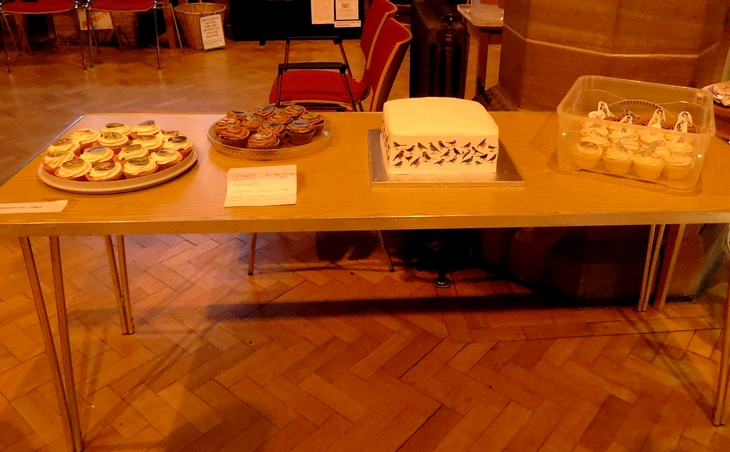
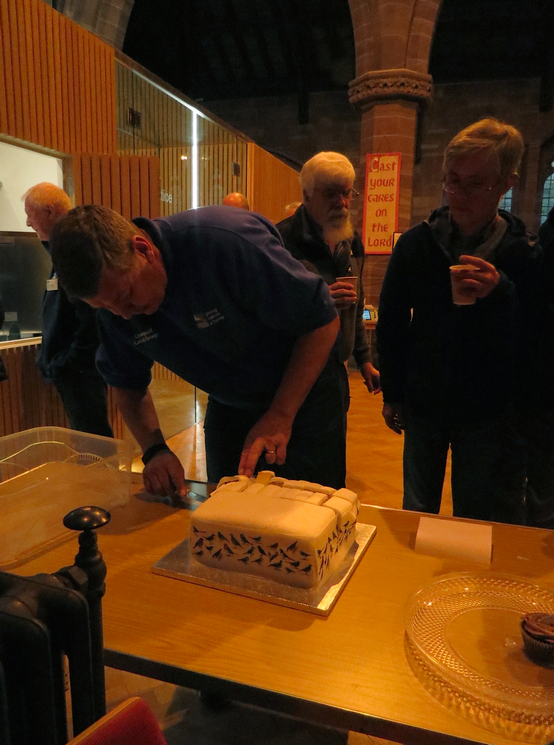
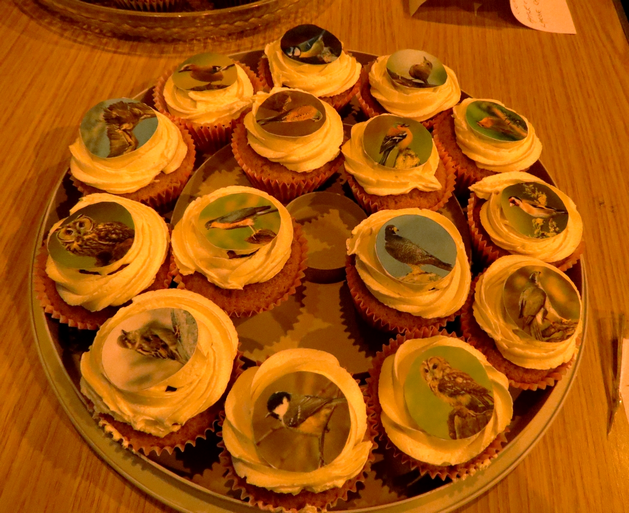
Liverpool RSPB’s 2022 AGM was a special evening, as it’s our 50th anniversary year, and quite rightly we celebrated with cake or should I say cakes. Local group member Anne Ludwig did us proud with 50 bird themed cupcakes and a large iced, layered sponge cake that Chris had the task of slicing up; also ensuring he had first dibs!


We also have 50 specially commissioned nest boxes, engraved with 'RSPB Liverpool 50yrs Giving Nature a Home', stock sold out on the night but more available on request.


Fifty nine of our members attended the meeting. Chris gave a Leaders report of the recent year’s activities and our future events. We went through the business of re-electing committee members, explaining expenditure and the group’s donation of £1500 to the Gough seabird appeal  (https://www.rspb.org.uk/our-work/conservation/projects/gough-island-restoration-programme/  All attending were given the opportunity to ask questions, make requests or share ideas.

Alasdair McKee, the RSPB'S Local Groups Officer followed giving an expression of thanks for all Liverpool RSPB do from RSPB HQ and then went on to  regale us with snippets from Bird Notes & News, the original RSPB newsletter-
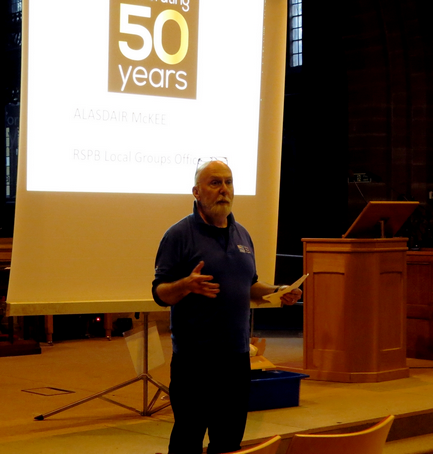
Alisdair Mckee


Did you know loathsome bird catching (still going on in the Mediterranean today sadly) was a general practice among English people in days past; for eating, plumage or entertainment?  Cage birds,nets and the abhorrent bird lime was freely advertised and songbirds were sold in big stores as food including skylarks  and fieldfares in season, and  the Southport  gun club, regularly held  starling shoots.

But all was not lost, in 1889, sickened by a slaughter of exotic birds for their feathers; Emily Williamson started the Society for the Protection of Birds aiming to campaign for change. 

I’m pleased to say our  neck of the woods played its part; In 1903 twenty  of the leading millinery firms in Southport held a  display show of plume free millinery at the RSPB Southport Branch and for 2 days in April their shop windows  were full of this trimmed millinery with the card ‘Without destruction to wildlife’… well done.

After campaigning tirelessly for change, the plumage (prohibition) Act was passed in July 1921, banning the import of plumage.  And Liverpool led the way in 1922, Liverpool succeeded in obtaining the first order issued in England protecting all wild birds throughout the year expressly to stop bird catching in the suburbs in the open season, congratulations to the Liverpool branch of the RSPCA and RSPB.


So what did Chris convey –?

The New RSPB website will be coming online shortly; in the meantime, the old site is still accessible showing details of future events.

Our peregrines, sited in the tower of Mossley Hill Church are doing well, and are expectant parents of 3. Male has been named Bruno, his lass is a girl from the midlands (ringed peregrine).

Chris liaising with RSPB HQ, and assisted by other local group members have been discussing and attempting to find solutions to the on-going problems of Liverpool’s netted high buildings, such as the Anglican Cathedral and Tobacco warehouse. These buildings have been netted for various reasons to stop Peregrines from breeding on them; to many a distressing situation and sadly not an uncommon practice throughout the country and often in the news. 

The RSPB resumed outdoor events in January. Our first being a replacement walk around Sefton Park, normally the group holds a ‘Big garden birdwatch’ event in the Palm House in January. To say it was popular was an understatement as approximately 80 people followed Chris along the paths; A mixture of regular members and those newly interested, several on the walk went on to the join the group and have  been out with us again.

Chris Tynan. RSPB Liverpool Jan 2022 Sefton Pk


Chris has been working with the NHS’s nature recovery rangers. Covering Aintree, broadgreen and the royal hospitals, a series of short local woodland health walks is what’s prescribed, in the fresh air embracing nature, connecting to green spaces to benefit their mental and physical health. Every hospital should have a ranger - https://www.youtube.com/watch?v=VKz7x2tjC6w&ab_channel=TheCentreforSustainableHealthcare


RSPB Liverpool will be on board for the two Birdwatching ferry cruises planned this year 16th July and 11rh of September. (Ticket Prices Adults - £20, Children aged (3-15) - £10)

https://www.merseyferries.co.uk/our-cruises/wildlife/bird-watching-cruises/#timetable-grid


Chris joined RSPB Liverpool in 1996, within a few years he was group leader.  In 2003 he was working for the RSPB on Southport pier, a testament to his skills in talking to, sharing his knowledge and enthusing the public about why birds were brilliant.  In 2018, Chris Tynan received the RSPB Presidents Award. The President’s award is given to 5 volunteers every year to highlight outstanding volunteering. Chris says birdwatching and carrying on with our group's leadership is what keeps him going, but warns someday we’ll need a replacement, yikes.


Well done local group member  Anne Ludwig, delicious


Cake ate or secreted away...Our meeting concluded with a talk from Chris about his favourite 50. His first recollected interest being inspired by blue tits, who were famed for sipping the cream out of the tops of doorstep milk bottles!

He told of magic moments at home, of adventures abroad and exotic locations, favourites from garden, woodland or sea, of agonising dipped birds. All had a memory attached, the bird or even the circumstances in which it was found.  I could list the birds, but that would be a spoiler for those who missed the talk, but might like to hear it in the future… from the Mersey Oystercatchers to the New Zealand little Blue Penguins, his list was an education in itself.


Laura

Friday, 29 January 2016

Merseyside, it’s time to join in the world’s largest wildlife survey

Fieldfare and  Redwing on Pyracantha

Over half a million people expected to participate in the RSPB’s Big Garden Birdwatch on 30 and 31 January 2016
People in Merseyside taking part in this year’s Big Garden Birdwatch will be helping to provide conservation scientists with valuable data about the changes in numbers of birds using our gardens in winter, enabling them to help protect our wildlife for future generations. 

More than half a million people are expected to watch and count their garden birds this weekend in what is the world’s largest garden wildlife survey.

For almost forty years, the RSPB’s Big Garden Birdwatch has helped raise awareness of those species in decline like starlings and song thrushes, whose numbers have dropped by an alarming 80 and 70 per cent respectively since the Birdwatch began in 1979

There is slightly better news for the house sparrow, as its long term decline appears to have slowed and it remains the most commonly spotted bird in our gardens. However, its numbers have dropped by 58 per cent since 1979

Dr Daniel Hayhow, RSPB Conservation Scientist, said: “Last year’s survey was another great year for participation. More than half a million people took part and more than 8.5 million birds were spotted in gardens across the country. 

 “With so many people now taking part, the results we get from gardens are very valuable. And as the format of the survey has always been the same, this data can be compared year-on-year. The results help us create an annual ‘snapshot’ of bird numbers across the UK, which, combined with over 30 years’ worth of data, allows us to monitor trends and understand how birds are doing.”

With the last month of 2015 being reported as the wettest and warmest December on record but with temperatures since varying between freezing and unseasonable mild, the results from Big Garden Birdwatch will also help the charity understand how these unusual weather conditions have affected birds visiting gardens this winter.

Ben Andrew, RSPB Wildlife Advisor, said: “If the UK experiences a continuation of these milder temperatures, those taking part in Big Garden Birdwatch may notice their gardens quieter than in other years. The milder weather means that there is more food available in the wider countryside, with birds being less reliant on garden feeders. However, winter is a hard time for our garden wildlife so it’s still vital that people keep their feeders stocked up with a variety of energy-rich food so birds can find food whatever the weather. Either way, mild or cold, it will be fascinating to see how the birds respond this weekend.”

For the third year running, the RSPB is also asking participants to log some of the other wildlife they see in their gardens throughout the year such as hedgehogs, foxes, stoats and squirrels, to help build an overall picture of how important gardens are for giving nature a home. The RSPB will share the results with Amphibian & Reptile Conservation (ARC), People’s Trust for Endangered Species (PTES) and The Mammal Society to add to their species databases. Results will help all the organisations involved build their understanding about the threats facing garden wildlife 

Dr Fiona Mathews, Chair of The Mammal Society, said: “Gardens can offer fantastic habitat for wild mammals, simply leave things a bit untidy and watch what happens.  For example, a bramble patch and a pile of fallen leaves can provide a good nesting site for hedgehogs, whilst bats will feed on night flying-insects attracted to blackberry flowers.”

Dr John Wilkinson, from Amphibian and Reptile Conservation (ARC), said: "It's great to see that the Big Garden Birdwatch is again recording species such as grass snakes and slow-worms, whose habitats are declining in the wider countryside. Gardens are crucial habitats for much of the UK's pressured biodiversity and you can, for example, encourage slow-worms into your garden by having a compost heap which is left undisturbed over the summer so they can give birth there - they will repay you by demolishing your slugs! If you're lucky, grass snakes may even use your heap for egg-laying."

David Wembridge, Mammal Surveys Co-ordinator, People’s Trust for Endangered Species, said: “Mammals are a less showy lot than birds but their presence in gardens is just as important an indicator of the natural value of these green spaces. Recording wildlife as part of the Big Garden Birdwatch lets us see how rich, surprising and precious our wild neighbours are.”

The survey is part of the RSPB’s Giving Nature a Home campaign, aimed at tackling the housing crisis facing the UK’s threatened wildlife. The RSPB is asking people to provide a place for wildlife in their own gardens and outside spaces – whether it’s putting up a nest box for birds, creating a pond to support a number of different creatures or building a home for a hedgehog. The Big Garden Birdwatch is just one of the steps you can take to help nature near you. 

To take part, simply request a free pack from the RSPB website or register your details to save time on the weekend. 

The RSPB will be live blogging throughout the weekend and offering downloadable bird song on their website as a soundtrack for the bird watch. If you fancy a sweet treat whilst counting the birds, delicious new cake recipes from Frances Quinn, winner of the Great British Bake Off 2013, will also be available on our website. For more information, visit rspb.org.uk/birdwatch

The parallel event, Big Schools’ Birdwatch takes place on 4 January- 12 February 2016. Further information can be found at rspb.org.uk/schoolswatch


This table shows the top 10 birds seen in Merseyside gardens in 2015

Species
Average number per garden
Rank
House sparrow
3.02
1
Starling
2.92
2
Blackbird
2.66
3
Blue tit
2.44
4
Woodpigeon
2.06
5
Magpie
1.69
6
Robin
1.42
7
Goldfinch
1.42
8
Feral pigeon
1.35
9
Great tit
1.22
10


Monday, 21 October 2013

Chris visits 'La Baie de Somme'

La Baie de Somme


Some photos (mainly just record shots as neither my camera nor my technique was up to the distances) are on my flikr pages (http://www.flickr.com/photos/80296786@N05).
The region around the estuary of the Somme is a haven for water birds and an important migration stop.  On the northern shores is the region of Marquenterre.  Originally created by polderisation for farming, it soon began to attract birds and the owners began to manage it for wildlife.  Today there is the Parc du Marquenterre, a formally laid out reserve and the Domaine du Marquenterre, a less formal region in private ownership which offers guided walking tours or electric car hire.   I only had time to visit the Parc. 
It's very well laid out, with good footpaths leading to and often through the hides.  Signposting is exemplary, and they've even thought to put in a composting toilet half way round!  In mid September it was a bit early for migrants, but I still managed quite a good species list, including my first great white egret and cattle egret.
Around the other side of the bay is the much advertised Maison de la Baie de Somme et de l'Oiseaux,  a small museum mostly devoted to a collection of stuffed birds, with ducks arranged by species on shelves and others in dioramas.  Not exactly birding, but quite interesting to a relative beginner like myself.  The museum also has information on the seals which can be seen at several places around the bay, and on the evolution of the landscape.  There's a small collection of captive ducks outside, and a massive one of carved decoy ducks inside.
Although wildlife and conservation are promoted in the region, fowling is an historical and continuing tradition.  Many etangs have flotillas of suspiciously still ducks.  In a way, the hunting mania benefits birds because reserves are protected from development.  One such area is the Hable d'Ault, near Cayeux.  It attracts both birders and hunters, which seems a bit odd to my English sensibilities, but c'est la guerre.  This is a much less organised region, without a good road and with no facilities.  The landscape is reminiscent of Dungeness, vast areas of pebbles partly covered in vegetation.  Some commercial extraction continues.  A large shingle bank separates the road from the sea and a fence keeps you mostly on the road, but small lakes are easily visible.  It was fairly quiet, (apart from the duck hunters!) but there was a good variety of birds including little terns and flocks of tiny serin.  Time was limited here, and the road was very bad for our vehicle, so I only saw a fraction of the reserve.

We returned to England via Folkestone, so I took the chance to visit rspb Dungeness, where I am reliably informed I saw a little stint.  This is  a reserve where a good scope would be a big advantage as the gravel pit lakes are extensive.  Oh, and I also saw a great white egret.  I don't know, you wait all your life to see one then two come along in the same week!


Chris Daniels

Monday, 30 April 2012

 Liverpool RSPB field Trip report - Black Grouse Lek
Sunday 29/04/12


Sunday found us up before the lark, leaving Liverpool at 4am in the pitch dark for a 5am meet at UPM Tilhill’s, Coed Llandegla Forest in Denbighshire. We arrived at the visitor centre just as dawn was breaking on the horizon. And flaming Palinka it was cold, 2 degrees Celsius with a bitter wind chill which soon got the better of my insulated gloves.
 
Seven hardy souls made it to Llandegla Moor in search of the lekking Black Grouse (tetrao tetrix), we were not disappointed. The count being 13 males and one grey female (ratio doesn't seem right to me somehow!). The species is red-listed in Wales, which means it is of the highest conservation concern. 50% of the Welsh Black Grouse population lives within one mile of the forest. The Lek, is an early spring display site, the male grouse mock fight to impress an audience of females - well hidden from our eyes this morning.  There are currently estimated to be 328 lekking males in Wales, a positive recovery over recent years. The Moor is managed for the grouse; the heather is cut consecutively, which forces new growth and allows the cotton grass and bilberry to gain a foothold, providing year round food for the grouse and their chicks.

          
A 30 minute walk through the forest brought us to our hiding place, a converted ships container – all mod cons here, magnolia walls, carpet on the seating bench, and a speaker transmitting the bird calls from a microphone hidden on the moor.  Although  400 metres away the  male birds  were easily visible on the open ground,  drooped wings, pure white tails feathers fanned out, bubbling, screeching  and strutting their stuff to impress the females. Just like miniature Capercaillies.  The highlight and best view by far was when the 13 males took to the air disturbed by a passing crow, their striking white wing bars evident as they quickly returned to their Lek and the important business of the day.
 
After half an hour or so the weather started to deteriate and the forecast rain fell as snow, time for a sharp exit… But just as we were leaving a rogue male flew towards the hide giving us a closer view. Apparently this bird has taken to displaying on a rise near to the container, its thought (hopefully) he could be starting up a new Lek.  

 
Taking the trail back through the forest offered us some protection from the inclement weather and gave us the other highlight of the day; Crossbills flying overhead and then a family group feeding in a Larch. Hooked bill, red underside and rich red rump a glorious male, a juvenile and the female of a more green hue. Despite the weather the dawn chorus was in full voice,  Willow warblers, Song thrush, Nuthatches and Robins sang out.  Overhead  small groups of Siskin and Redpoll flitted through the canopy. A Tree pipit in a tree gave us a closer view, as did a Coal tit, and Goldcrest.
 
As the snow came down we retreated to the Oneplanet cafe for a full Welsh breakfast, a bacon bap or would you rather have porridge and home produced honey?  We left at 9am just as the hordes of weather resistant mountain bikers arrived for the day.
.
Our day list: Crow-Dunnock-Blackbird-Woodpigeon-Siskin-Crossbill-Black grouse-Tree pipit-Goldcrest-Robin-Redpoll-Mallard-Canada Goose-Coal tit-Collared dove-Chaffinch-Jackdaw-Jay-Song Thrush.
 
Julie our RSPB guide at Llandega tells us ‘there be Nightjars’ on site and they plan to hold future Wednesday night viewing events - barbecue supper included !… so, get your white hankies ready and watch this space.
 
 
Report compiled by Stores and Laura.
 
Ps  Palinka is a Hungarian brandy – just getting ready for the groups big trip!

Wednesday, 25 April 2012


Liverpool RSPB Field trip report
RSPB Leighton Moss Sunday 22/04/12.


16 determined birders ignored the weather forecast and headed out to RSPB Leighton moss. We were not disappointed. 
Our first highlight of the day came with a chance sighting of 3 frolicking Otters, splashing about in the sunshine, observed from the roadside on the way into the reserve the first tick of the day and it wasn't a bird!

Once inside the reserve we were only confined to quarters on  2 occasions - when it really was raining stair-rods, but this proved to be no hardship tucked away  in the reserves  cosy hides observing -  smart spring migrant Garganey. A pair of Great Crested Grebes performing their ‘running on water’ courting ritual, pond weed offerings clenched in beaks. The barbarism of 2 male Moorhens locked in a fighting frenzy, furiously kicking out with their feet.  And the ‘Ahh’ moment? Watching the wobbly antics of 2 clutches of Greylag goslings finding their feet.

Without doubt one of the major events of the trip was the Osprey that flew in from the estuary ahead of a squally band of rain, you’ve never seen so many people move so fast, jostling to get a better view as the bird flew over the Eric Morecambe hide on the look out for its fish dinner. Other diners on the pools, alongside the many Godwits and Redshank were impressive Spotted Redshank, Avocets and Egrets. After lunch the group had a lucky break with a tip off of where to find the lonely, lingering Glossy Ibis, another tick for the day.

A walk round to the public hide rewarded us with some great views of a pair of Marsh Harriers flying low along the tree line and woodland slopes. A comical moment was a peckish Cormorant struggling to swallow a rather large eel, believe me that eel wasn’t going out without a fight; you could see it wriggling all the way down.

The day finished with the group taking a diversion from the road home. Stopping off on the A6 to a riverside spot, where we were told a kingfisher hung out; the bird was there but sadly only a few of us got a fleeting turquoise glimpse of it as it swooped along the riverbank. A dippy Grey Wagtail was a welcome bonus to our tick list.

The tickmasters list recorded 70 species seen and a few that got away, being heard but not observed, Reed warbler, and most frustratingly Cetti's warbler and Bearded Tit...Ping.  

Bar headed goose-Greylag goose-Pheasant-Collared dove-Robin-Woodpigeon-Jackdaw-Mallard-Great tit-Blue tit-Chaffinch-Buzzard-Black headed gull-Coot-Great crested grebe-Pochard-Gadwall-Tufted duck-Garganey-Canada goose-Greenfinch-Lapwing-Teal-Moorhen-Shoveler-Reed bunting-Great spotted woodpecker-Wigeon-Lesser black backed gull-Wren-Blackcap-Bullfinch-Coal tit-Magpie-Marsh tit-Dunnock-Grey heron-Chiff-chaff-Swallow-Spotted redshank-Pied wagtail-Shelduck-Avocet-Redshank-Oystercatcher-Little egret-Black tailed godwit-Carrion crow-Osprey-Meadow pipit-Long tailed tit-Goldfinch-House sparrow-Glossy ibis-Mute swan-Feral pigeon-Kestrel-Sparrowhawk-Marsh harrier-Cormorant-Great black backed gull-Little grebe-House martin-Sand martin-Willow warbler-Grey wagtail-Kingfisher-Skylark -Song Thrush.
A mix of heavy down pours and sunshine, but we didn’t get wet, and a great day out was had by all even if we did leave behind the sea odyssey spectacular.

Cheers
Stores & Laura.

Wednesday, 4 January 2012

Liverpool RSPB's BIG New year birdwatch


After getting up nice and early with a scrapping of ice from the windscreen, it was up to the Speke/Garston LNR for Liverpool RSPB's BIG New Year Birdwatch and the start of many peoples New Year birdlists. Sunday compared to the previous days total washout, dawned cold, dry, sunny, with a slight breeze with little wind chill. 35 intrepid birders joined the throng eager to start the walk, ears pricked binos at the ready.

A great start even before the last boot was laced and the car park left we had seen Blackbird, Woodpigeon, L.B.B.Gull, Goldfinch, Flocks of Starling, a Grey Heron in flight and hunting Kestrel. Walking the path toward Garston shore we spotted Redwing perched in the trees, soon joined by 2 more of the Turdus species Mistle thrush and singing Song thrush. The Kestrel we had seen hunting earlier came to perch in the trees close to the path giving us great views of her sunlit plumage, she didn't seem to be bothered by the gawping humans 20 0dd feet away! Shortly after it was joined by the tercel, male and female together.

A Greenfinch was the last to be ticked off before we moved onto the river birds. Along the shoreline probing the mud ( MERSEY MUD MATTERS -website article) we found Redshank, Cormorant, Herring gull, Black Headed Gull, Curlew, Teal, Mallard, Lapwing, and a magnificent yet menacing Gt.Black Backed Gull. Overhead being mobbed by crows an unconcerned Buzzard scanned the reserve blow. In the breeze swept reeds between the mudbanks and the path Reed Buntings flitted between the stalks, a Wren called out and was duly ticked. Back on the river we had 3 Shelduck bobbed along, quickly out done by a flock of Dunlin, twisting and turning in flight along the shore looking for the best bit of mud to alight on. A Turnstone was observed, doing what it does best, turning stones, piping Oystercatcher completed the picture.


Turning away from the shore scanning the fields around the warehouses, we ticked off Magpie, Collared Dove, and Carrion Crow. And a then at mega for the day the strange distant bird acting like a kestrel turned out to be a Peregrine perched onto the corner of the B&M building, then swooping through the buildings and onto Speke Hall Woods. Spreading out for walk through the marshy grassy area, our stealthy band of 'beaters'! Flushed out a marvellous Brown Hare, a covey of 5 Grey Partridge, a Skylark, a Snipe and a Meadow Pipit.

Moving on to our second stop of the day we re -grouped by Sefton Park Lake (Along with a large proportion of Sunday strolling Liverpudlian families enjoying the sunny weather- the swans, geese and ducks were all well fed that day) The tick list grew, as we added feral Pigeon, Mute swan, Common gull, Coot, Canada goose, Moorhen, 4 gorgeous Little Grebes, and a sprightly lakeside Grey Wagtail. Leaving the lake and into the trees we espied, along with the resident Grey Squirrels and Rats, Blue tit, a good view of a Ring neck parakeet (a first for many of our group), Long tailed tits, Great tits, hunting Sparrowhawk, Robin, Chaffinch, and a posing Jay perched on a branch probably keenly watching where the resident Grey’s were burying their monkey nuts. A Pied Wagtail and 4 Mistle thrush's were on the playing fields avoiding the footballers.

A short walk over to nearby Greenbank Park gave us a Tufted duck, a Jackdaw, another sighting of the Ring necked Parakeet and a handsome male Goldeneye on the lake.

Back to our cars for a quick drive to the Black Woods in Childwall gave us Nuthatch, Coal tit, female Great spotted Woodpecker and male Great spotted woodpecker as "Ged" our Woodpecker expert pointed out at the last indoor meeting 'Red on the crown'! Stock dove and to finish off as the sun was going down we got lovely Brambling.


60 birds in total, not bad for a day in local parks.

BIRD REPORT COMPILED BY CHRIS STOREY THE TICKMASTER!

And a little bit from me!

Laura

Tuesday, 28 April 2009

INTERNATIONAL DAWN CHORUS DAY


Sunday 3rd May is
INTERNATIONAL DAWN CHORUS DAY

Know your Chiff Chaff from your Willow Warbler? they look very alike but their song gives them away.
Bird lovers from around the world will be joining in on this world-wide event organised by the Wildlife Trust for Birmingham.

So, you are invited to drag the kids out of bed and join us on an early morning wake up stroll; around the Mull woods and park area, listening to the magical sounds of birdsong as the sun rises, followed by a much needed hearty English breakfast and hot drinks in the Old Riding School Cafe.

I could keep this a secret, competition and all that but - Free bird seed pack to the first 30 people who arrive at this year's Dawn Chorus event courtesy of Vine House Farm.


WHERE: Croxteth Country Park, Liverpool, Merseyside, L12 0HB

MEET : Sunday 3rd May, 2009, At Main Entrance of Croxteth Hall

TIME: 6.30 – 8.30 am

FEE: Adults = £7.50 Children = £2.00

(Discount for RSPB Members Fee £ 5.00, RSPB WEX Members £1.00 * Please bring your RSPB and WEX membership cards for discount)
Entrance- From Croxteth Hall Lane to park (Speed 15MPH) through Flint drive to Conference Centre Car Park for safety reasons - as cctv. Gates open from 5 am.
1- Please maintain slow speed inside the park.
2- Beware of moving park security vehicles, tractors, cattle.
3- Mind the bumps.
4- uneven, slippery paths.

For further information /booking your place:
Miss Samina (Sam) Farooqi (RSPB WEX Group’s Leader)
Mobile: 07942 441305
Email:
sam_wild1211@yahoo.co.uk


Wednesday, 30 July 2008

GET ON BOARD ME HEARTIES!!!


LIVERPOOL RSPB ARE CRUISING THE MERSEY - GOT YOUR TICKET YET?

JOIN US AND OUR EXPERT BUDDIES FROM LIVERPOOL MUSEUM ON OUR ANNUAL LIVERBIRD DISCOVERY CRUISES.

WEDNESDAY 13th & THURSDAY 14th AUGUST
WEDNESDAY 24th SEPTEMBER

'AH THERE'S NOTHING LIKE THE SMELL OF FRESH CHUM IN THE MORNING' ... right chris!

http://www.merseyferries.co.uk/special/index.aspx

http://www.rspbliverpool.org.uk/ferrypageevent.htm

See you there ...Laura