|
| A room with a view, young bird peeping out. |
I grew up with swifts nesting
in the roof space just above my bed at the family home in Liverpool. When
Spring arrived I couldn’t wait for their screaming calls to wake me in the
morning. We had at least four pairs breeding every year and ours were one of
three houses in the Close that they chose to breed in. What a privilege. Compared
to swallows and martins they are very clean birds around the nesting site: no
need to dodge their droppings ever!
 |
| Cleaning out the box before nesting. |
When I moved to Hale,
although there were swifts around none were breeding near to us. I really
missed them. We’ve had swift boxes since 2007 and over the years we have had
mixed fortune with their breeding success. Our original Schwegler box, with two
nest holes, was a Christmas present to Rob: it was heavy but has worked well.
We used the prescribed tape recording to attract them in and this meant we had
them breeding the first year, although that year the swifts squeezed into the
bat box which is hidden at the back. Although they raised young we don’t know
how many fledged. As there was only a small chance of bats using the box we
blocked it off the following year.
 |
| Schwegler & old wooden boxes |
By the second season we had
added two new boxes on either side. They were made to our own design from
marine ply. These were not so successful: we think they got too hot for comfort
but they were readily taken up by starlings. Initially we were annoyed by the
starlings (not red-listed then) but it soon proved that their first broods had
all fledged before the swifts arrived. The swifts stood no nonsense from them
and quickly ousted any trying for a second brood and the swifts cleaned the
nests thoroughly before nesting began.
The following two years they
successfully raised young which were ringed but there have been no further
sightings of these birds. As they are such long-lived birds we hope they are
still on the wing. Usually only one pair bred in the Schwegler box although we
have had two breeders occasionally. Over the following years we had two years
when they failed to breed and a couple of years when they failed at the feeding
stage, mainly due to prolonged adverse weather conditions. On the whole they
fledged at least one young and sometimes up to three.
 |
| Tenants |
Every year there is a stage
when it all goes quiet: you know the young have hatched because you hear them
and then - nothing. Panic sets in! Have they failed again? What happened to the
young? Was an adult killed somehow? It happens every year and we’ve never got
used to it… And one day you’re in the garden - a movement catches your eye, you
look up and there’s nothing there! Over the next few days you keep glancing up
and suddenly you see the youngsters peeping out at you. Later it can become a
bit of a scrum as the jostle for position.
 |
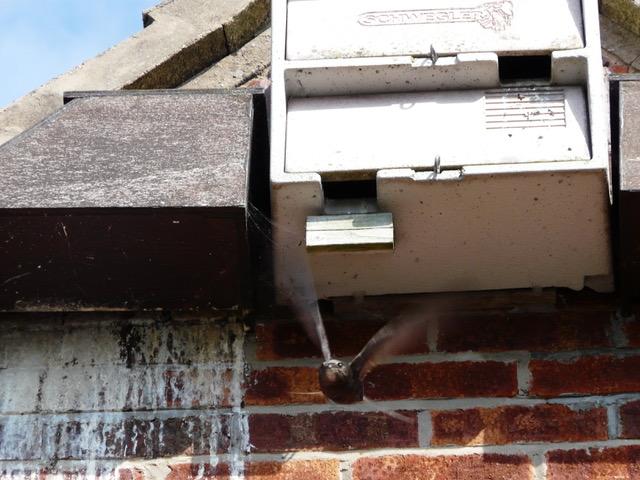
| In & Out |
Part of one of the wooden
boxes fell onto the roof below in a storm last year, so we removed them both.
Our neighbour built a new extension and a garage last year and he has
incorporated two swift bricks into the construction and we now have a couple of
swift bricks to try out but are keeping the Schwegler boxes too. At least four
friends now have boxes on their houses.
In the Autumn we play the
calls again for a couple of weeks: this encourages young, passing birds to look
at the colony and hopefully attract them to breed the following year. This is
the most exciting time, when up to twenty birds are screaming around the house
in the evenings while we sit with a glass of wine! (or beer)
Please try to find a way to
encourage the swifts to nest on your house. There is plenty of information on
the Internet. It’s just so exciting to watch their progress. Honestly, I can’t
imagine being without them.
Carol Cockbain
RSPB Liverpool member, Editor and Friend of Pickerings pasture
https://www.swift-conservation.org/
https://www.facebook.com/BoltonAndBurySwifts/
https://twitter.com/bandbswifts
https://www.nhbs.com/1mf-bat-and-swift-nest-box
https://ww2.rspb.org.uk/groups/liverpool
http://www.thefriendsofpickeringspasture.org.uk/index.html