Showing posts with label redwing. Show all posts

Tuesday, 11 October 2016

Vis Mig at Hale 09/10/16

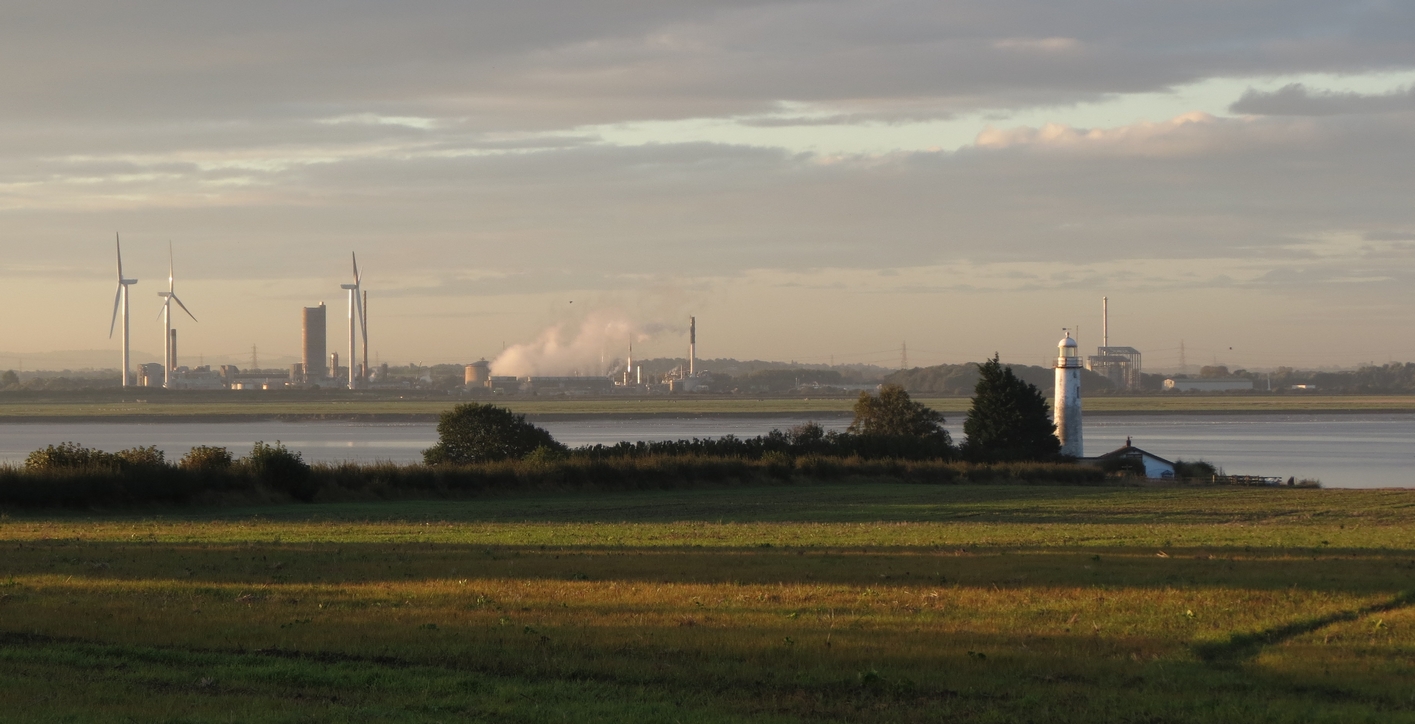
Sun's up. Runcorn/Widnes bridge in distance


Church lane watchers
It was a beautiful morning on Sunday at Hale for our visible migration field trip.
Highlight for me was the Merlin, tree sparrows, redwings and flappy fieldfare, looovve our scandinavian visitors. 
 Laura
Fieldfare


Sunday 9 October 2016

Counting period: 07:25 - 09:30
Count type: incomplete species list, not all species submitted
Weather: wind NE1, cloud-cover 3/8, visibility 25m, temperature 9 ℃, Sunny , cool NE wind F1,
 3/cloud slowly decreasing cloud cover through watch
Observers: Jeff Clarke, Chris Tynan plus RSPB group

Pink-footed Goose *
8
Woodpigeon
4338
Magpie
9
Jackdaw
4
Coal Tit *
6
Skylark
3
Swallow
5
House Martin
2
Starling
13
Fieldfare
41
Redwing
1479
Song Thrush
15
Mistle Thrush
3
Tree Sparrow
9
Grey Wagtail
2
alba wagtail sp.
13
Meadow Pipit
11
Chaffinch
204
Brambling
1
Hawfinch *
2
Bullfinch
1
Linnet
12
Lesser Redpoll
1
Goldfinch
56
Siskin
6
Reed Bunting
1

Totals: 6245 individuals, 26 species, 2:05 hours

Bold = Remarkable observation (scarce or rare species or large number)
* = Additional info (on mouseover species)


Comments: Probably significant undercount on passerines due to large group presence impeding call reception.
All migrants vectored south or south-east unless otherwise stated.

Count Website
http://www.trektellen.nl/count/view/392/20161009

Hale lighthouse


Friday, 31 October 2014

Greenacres revisited and an invitation


Nipped into Greenacres this morning 
Emma woods Burial grounds

What a lovely serene place this is, and being enhanced all the time; today the grounds staff were busy planting out an orchard – to the left of the main drive in front of Emma’s Cottage, good news for the local wildlife.  I’m also told they have 2 new owl boxes to put out, pending RSPB advice and assistance on best places to situate.

On arrival I stocked up their bird table and went for a stroll. The first thing you notice as you head out is not necessarily what you see but what you hear, Grace wood was alive with the calls of long tailed tits, 

Long tailed tit in spring - Laura
intermingled were also the voices of nuthatch, robin and blue tit. On closer inspection you could see these pretty lollipops flitting around the trees and hedges.


No sign of the squabbling kestrels I’d seen in September,

http://liverpoolrspb.blogspot.co.uk/2014/09/giving-nature-home-at-greenacres.html in fact no raptors in the hour I was there, just plenty of jackdaws, crows and wood pigeons flying over. Never mind at treat was in store, ‘Redwings’, I must have seen well over 100 fly over Grace to Emma woods in several flocks, some stopped to feast on the shrub laden berries on the woodland boundary, before moving on across the fields towards the East Lancs Rd. What Splendid birds these Scandinavian thrushes are, with their distinctive rusty red markings under their wings - often heard before seen, especially of an evening during migration.
Redwing in winter - Laura
In the grounds of Emma woods, there was plenty of other bird activity, blackbirds and robins, coal, long tailed, blue, great and coal tits flitting through the trees & hedgerows. Nuthatches were in good voice and clearly visible wandering up the tree trunks. A wren was searching through a log pile close by. The best was to come though a call alerted me to a gt spotted woodpecker hopping around the branches above, then a familiar waggy flight drew my attention to the small pond in this area of the wood, here a grey wagtail was skimming over the surface, great birds to watch a while.  
Tree sparrow  Andy Hay -RSPB

Leaving the woods and heading down the path towards Emma’s cottage, the well established mixed hawthorn, elder hedge was attracting more blackbirds, robins, tits, redwing and I’m glad to report - the tree sparrows.

Additionally Chaffinch, pied wagtail and collared dove around the cottage grounds.
Back to the office to pick up some info on the forthcoming Christmas craft fair, a pleasant little excursion to a special place. 


Come along and support  the local Willowbrook hospice, pick up a chrissie pressie!  all whilst doing a spot of  secret bird watching!


Willowbrook Craft Fair Sunday 02/11/14
Greenacres
Blindfoot Road, Rainford, St Helens
Merseyside
WA11 7HX

Doors open 10:00am – 2:30pm

Lots of stalls:

Anime, Hand made jewellery.
Dawn Jackson glassware.
Novelty Nicknacks - stocking fillers?
Angel creations,  bookmarks and cards
Vintage & artist creative photography cards
Willowbrook Hospice Merchandise and Tombola (http://www.willowbrook.org.uk/)
Hazles gifts & Non stoppers supporter group  (100% profit to Willowbrook)
Andrea brown Crafts
Bab-b bunting and vintage crafts
Sweet treats
Cake delights by Karen – beautifully baked cakes
Bill Chester Wood turning
Namaste healing, incense and candles
Charlwood crafts
Ann’s woolly crafts, knitted goodies
St Helens soroptomist club, knitted poppies

Staff from the Tartan Tea rooms, Rainford will be selling soup, sandwiches and refreshments throughout the day.


Laura 

Monday, 9 December 2013

A tale of two Tides


Deceased Water Rail -Neil P


Parkgate – Thursday, 5th November, 2013

Peaty Jen, Linda Rees and I rather foolhardily decided to go to Parkgate to watch the high tide.  On arrival we could barely stand up and decided to watch as much as possible from the confines of a very small but dry and warm car!!  We watched as thousands of birds took off from the encroaching water, it was too murky to see what they were, we knew we saw geese, think they were Canada and Pink Foot.  Lots of Cormorants battling but getting nowhere.  Ducks, Little Egrets, Waders all taking to the skies at once.  Wonderful to see, not good for them.  The small birds like Redwing, Linnet and Skylark were really struggling. 

We got out of the car, and immediately saw two Short Eared Owls.  We thought that perhaps the tide would not get to the wall. Wrong!  It overtook the wall causing untold devastation to the small mammals which were neither quick nor strong enough to get out of its way!  We saw lots of dead voles, shrews and other small things. 
Parkgate Rails- Rhodie B
As the tide continued to railroad in the Water Rail were flushed, we saw them being buffeted against the wall, and I have since heard that at least two have been found dead.  Such a sad sight.  A man decided to take a picture of a fox which was trying to get up the harbour wall, it was so distressed, it was last seen trying to swim out to sea away from him.  Another person lifted a little vole out of the water, took a picture, then put the vole back!!  Wish I had seen him, he would have joined the vole.  Cars were still driving along the coast road, and ran over the little creatures that had managed to escape the water until a very sensible motorist blocked the road and helped save numerous other mammals.  A wonderful spectacle in the sky, but a very different story on the ground.

Hoylake – 7th December, 2013

Another day, another high tide and a very different outcome.  Hoylake on Saturday was very benign.  No rushing waters, just gentle rolling wavelets, but the birds were very skittish, possibly from the two days they had endured earlier!  I saw lots of Knot, Oystercatchers, Dunlin, Redshank, Curlew, Grey Plover and, the usual assortment of Gulls. 

As most people were looking out to sea a Sparrowhawk flew over our heads, and a good view was had by some of us, including me!


Peregrine on shore  - Rhodie B
Then the spectacle of the day was seeing a Peregrine Falcon sitting on a huge tree, near the edge of the water.  I watched it preen, it then took off and gave chase up the beach.  It didn’t catch anything so came back and hunkered down on a grassy mound in the sands.  The next thing it was off, flying low, at a tremendous rate across the beach.  It saw the Knot, the Knot saw it and started their wonderful synchronised flight.  The Peregrine singled one out and the chase was on.  They swooped, they rose higher and higher.  I think it was the luckiest Knot alive that day, it escaped.  I then walked back to the station, and home to a hot cuppa! 

Rhodie 

Friday, 16 November 2012

BTO Garden Birdwatch update


The year-round BTO Garden BirdWatch reports busy times in gardens this autumn. The 40 or so most frequently-spotted garden birds, have been 15% higher this October compared with the previous three. Woodland birds have particularly caught the eye. 
With seed and nut crops in the countryside appearing to be patchy, many woodland species have turned to bird feeders (as have Grey Squirrels) Many householders over recent weeks who have been enjoying watching Coal Tits busily caching food for the winter. This diminutive bird was up 62% in gardens this October compared with the three-year average. 

Winter visitors to our shores, Bramblings, have also been delighting householders. Numbers of this attractive finch in gardens vary annually depending on levels of immigration and food availability in the UK countryside. Normally Bramblings move more into gardens from mid to late-winter, but this year has seen an unexpected early peak. Is this the start of bigger things to come over the next few weeks, we wonder? Also sweeping onto feeders in larger numbers than normal have been Siskins – their numbers four times higher this October compared with the recent average for this month.

Other seed and nut specialists have been taking advantage of offerings provided by householders. These include Nuthatch (up 90% this October), Jay (up 85%) and Great Spotted Woodpecker (up 66%).
 BTO research shows these and several other species are known to make greater use of gardens when natural food in the countryside is scarce. The influx of birds into gardens hints once again at the vital role that gardens play in the wider foraging environment of many birds.
In parts of the countryside, berries also appear to be thin on the ground this autumn. In gardens, however, birds are able to exploit different fruits and berries owing to the presence of many native and non-native trees and shrubs. These are currently attracting several members of the thrush family – most notably Blackbird, Mistle Thrush, Redwing and Fieldfare – in unusually high numbers. Providing some fruit, such as apples or pears, will help cater for these thrushes, and will also help to sustain visitors such as Blackcap.

Get involved, record your garden visitors:

Laura