Showing posts with label Dee Estuary. Show all posts

Wednesday, 20 February 2019

Wirral nature reserve receives VisitEngland Welcome accolade

Burton Mere Visitor Centre - Ron Thomas


Staff, volunteers and visitors are celebrating at RSPB Burton Mere Wetlands, the popular nature reserve near Neston, following news that the site has been awarded the prestigious Welcome accolade from VisitEngland – one of just six attractions in the North West to receive an award this year.
Attractions across England are awarded VisitEngland accolades in appreciation of the outstanding experiences they provide, with other categories including story-telling, food and drink, hidden gem status and an overall Gold award. The attractions have achieved these awards based on the score they obtained following their annual assessment by VisitEngland, with Burton Mere Wetlands’ Welcome accolade a result of its 100% score on the staff component of the assessment.
Burton Mere Wetlands, the heart of the RSPB Dee Estuary reserve, is increasingly popular with nature enthusiasts of all ages, with thousands of visitors flocking to the site each year to explore its unique visitor centre, extensive trails, breath-taking wildlife spectacles, wild play area and impressive views.
Graham Jones, Site Manager at RSPB Dee Estuary reserve, said: “This is fantastic news for the reserve and we’re sure that our visitors will be as thrilled as we are.
“To achieve a Welcome accolade is such an honour. This award reflects the ongoing hard work by everyone here at the Dee Estuary to deliver an outstanding visitor experience for the many families and individuals who enjoy our wonderful reserve each year.
“A huge thank you goes to our staff and volunteers for working so hard to deliver the highest level of visitor experience at Burton Mere Wetlands. To receive this award in the reserve’s 40th anniversary year is a fitting recognition of the sensitive development the RSPB has delivered on the Dee Estuary, since our beginnings at Parkgate in 1979.”
VisitEngland Director Andrew Stokes said: “England is home to world-class attractions right across the country, welcoming visitors throughout the year and offering experiences of the highest quality including excellent food and drink and outstanding customer service.   It is also really fantastic to see these accolades recognising the work of those employees, managers and owners who make sure that all who pass through their doors have a truly memorable experience.”
VisitEngland’s Attractions Accolades, now in their fifth year, can be attained by members of the VisitEngland Visitor Attraction Quality Scheme in categories including the Welcome Accolade, Hidden Gem, Best Told Story, Quality Food and Drink and the Gold Accolade for all-round top-scoring attractions.
For further information on the special events and wildlife at RSPB Dee Estuary, visit
https://www.rspb.org.uk/reserves-and-events/reserves-a-z/dee-estuary-burton-mere-wetlands/


Wednesday, 26 September 2018

Prepare for an awesome autumn spectacle on the Dee Estuary

Lapwing- Sam Ryley.

Whilst some people lament the passing of summer, the Dee Estuary enters arguably its most exciting time of year due to the arrival of vast flocks of birds returning from their Arctic breeding grounds. The RSPB is inviting visitors to take part in a series of events across their Dee Estuary nature reserve to share some of the most impressive natural spectacles in this region.
Dan Trotman, Visitor Experience Manager for RSPB Dee Estuary nature reserve, said: “I’m a huge fan of autumn, it could even be my favourite season of the year. The reserve here comes into its own, supporting thousands of wetland birds as they swap the cold Arctic for our warmer climes. High tides make for some excellent wildlife watching too, pushing the vast swathes of wildfowl and wading birds into closer view along with the birds of prey that hunt them.”
To experience the growing flocks on the estuary, drop-in to the ‘Tidewatch’ event on Tuesday 9 October at the Donkey Stand on Parkgate promenade. RSPB staff and volunteers will be on hand with telescopes and binoculars to enhance the impressive views. Suitable for people of all ages and abilities, the event is free of charge, but donations are welcome. Timings vary depending on the tides, so visit rspb.org.uk/parkgate for more details.
Meanwhile, with earlier sunsets - another special autumn attraction on the Wirral - it becomes easier to witness the daily spectacle of the endangered hen harriers flying to roost on the marsh off Parkgate. Head to a ‘Raptorwatch’ event at the Old Baths car park, off Boathouse Lane, for the chance of seeing up to seven different types of birds of prey that make their home on the estuary in winter, plus northern England’s largest little egret colony flying in from the marsh to their night-time roost. The events take place on the second Sunday of each month until March, starting Sunday 14 October, and run from 1pm until sunset.
Elsewhere, the heart of the RSPB Dee Estuary reserve, Burton Mere Wetlands, is renowned for its growing flocks and wide variety of wading birds at this time of year as they move through on their long migrations. Families visiting the site can enjoy the ‘Wonderful Waders’ Wild Challenge quiz trail to learn about these birds. The trail is available between 9.30am and 3.30pm every day through October free of charge, normal admission charges apply for non members.
October also sees the return of Wirral Wader Festival, a partnership event between Wader Quest, the RSPB, Dee Estuary Voluntary Wardens, and Cheshire Wildlife Trust, now in its fourth year. Over the weekend of Saturday 27 and Sunday 28 October, the event aims to showcase the spectacle of wading birds on the protected Wirral coast with various events and activities at Hoylake and West Kirby. For full details of the events and activities during the festival, visit wirralwaderfestival.blogspot.co.uk or www.facebook.com/wirralwaderfest.
Dan added: “You don’t have to be an avid birdwatcher to appreciate the vast numbers of birds that call the Dee their home at this time of year. These upcoming events are planned to showcase these awesome natural occurrences and show why it’s so important for the RSPB to keep almost half of the estuary under its protection. These spectacles are perfect to wow families, and kids will love kicking fallen leaves and a bit of den building at Burton Mere Wetlands. So pop on an extra layer or two, and come along, we’d love to see you!”
For further information on events and wildlife at RSPB Dee Estuary, visit rspb.org.uk/burtonmerewetlands.

Tuesday, 25 April 2017

Fire damages important wildlife area on the Dee Estuary

Fire damage 


Firefighters were recently called out to tackle a blaze on the RSPB Dee Estuary nature reserve which damaged an important area for nesting birds and wildlife.

Thankfully the fire was quickly brought under control and caused far less harm than the previous incident of this kind in 2013 which was started deliberately and destroyed a large swathe of Neston Reedbed and spread to Parkgate Marsh.

However, the incident has raised repeated safety concerns from RSPB staff as arson attacks on the site have been an ongoing problem for a number of years. Due to this, the RSPB operates a wardening scheme with volunteers patrolling the area, on the lookout for any inappropriate or potentially damaging behaviour.

Colin Wells, Site Manager at RSPB Dee Estuary nature reserve, said: “This is a stark reminder of how vulnerable the reedbed and its surrounds are at this time of year. The last few weeks have been relatively fine and combined with periods of strong winds, the conditions on the marsh have become brittle and dry, which meant the fire would have started easily.

“We have a team of volunteers who warden the area in the evenings to try and discourage people from starting fires, which has successfully prevented any for a few years. It was the fast action of one of these volunteers on Saturday evening to promptly raise the alarm and allow the fire to be extinguished quickly before too much damage was done.”

The RSPB are concerned about the damaging impact the blaze may have had on local wildlife living in the affected site, particularly harvest mice and nesting birds.

Colin added: “The harvest mice have lost their habitat and many of them may have been injured or killed. The area is an important breeding ground for birds such as reed buntings and water rails. They have lost their nesting areas.  It’s devastating as we work so hard to create and maintain this site for wildlife and people to enjoy.

“We would benefit from having more volunteer wardens to help keep an eye on the reedbed area in spring, so if any local residents are keen to help protect this special wildlife habitat, get in touch with us at Burton Mere Wetlands.”

Police are treating the fire as a potential arson case. Anyone with any information is asked to call Ellesmere Port and Neston Neighbourhood Policing Team on 0845 458 6373.

To enquire about the volunteer warden opportunity, email deeestuary@rspb.org.uk or telephone 0151 336 4932. For more information on the reserve and its activities, check out the website rspb.org.uk/deeestuary

Tuesday, 7 February 2017

Family fun at RSPB Burton Mere Wetlands this February half term

Nesting Great tits
This month sees the British Trust for Ornithology’s annual National Nestbox Week (https://www.bto.org/about-birds/nnbw) take place, and the RSPB is running a fun family quiz trail at Burton Mere Wetlands to celebrate.


Available every day throughout February, families are invited to pick up a quiz sheet at reception between 9.30 am-4.30 pm and follow the trails to discover the variety of nestboxes available to help give nature a home. It is free to take part, though normal admission charges apply to non-members.
There are also Wildlife Explorer backpacks to hire for budding nature detectives and a den building area in the woods to get active and creative.

Whilst some winter flocks will be preparing to leave towards the end of February, others like the iconic avocets normally start arriving at Burton Mere Wetlands around the middle of the month.

From Wednesday to Sunday each week, visitors can pick up some lunch from the on-site catering van, offering a range of hot and cold sandwiches, toasties, paninis and burgers.
Sausage or Bacon? Decisions


Venue: RSPB Burton Mere Wetlands nature reserve, Puddington Lane, Burton, Cheshire, CH64 5SF.

Contact: For further details visit rspb.org.uk/deeestuary.org.uk or phone the visitor centre on 0151 353 8478.

Thursday, 29 September 2016

Prepare for an awesome autumn spectacle on the Dee Estuary

Inline image

As summer draws to a close, the Dee Estuary enters arguably its most exciting time of year due to the arrival of vast flocks of birds returning from their Arctic breeding grounds. The RSPB is inviting visitors to take part in a series of events across their Dee Estuary nature reserve to share some of the most impressive natural spectacles in this region.

Dan Trotman, Visitor Experience Manager for RSPB Dee Estuary nature reserve, said: “I’m a huge fan of autumn, it could even be my favourite season of the year. The reserve here comes into its own, supporting thousands of wetland birds as they swap the cold Arctic for our warmer climes. High tides around the equinox make for some excellent wildlife watching too, pushing the vast swathes of ducks and wading birds into closer view along with the birds of prey that hunt them.”
The Dee Estuary is home to the largest little egret colony in Northern England and, with earlier sunsets which are another special autumn attraction on the Wirral, it becomes easier to witness the daily spectacle of over 300 flying in from the marsh to their night-time roost.  To celebrate this wild wonder, ‘An Evening with Egrets’ guided walk is taking place on Saturday 8 October at RSPB Burton Mere Wetlands. The event costs £6.50 per person (£5 for RSPB members), half price for children. Booking is essential by phoning 0151 353 8478 or email deeestuary@rspb.org.uk.

Visitors can also take part in ‘Autumn Arrivals’ on Saturday 15 October at RSPB Point of Ayr near Talacre. This short guided walk involves crossing beach and sand dunes so suitable footwear and a decent level of fitness are required. The event is free of charge, but donations are welcome. Booking is essential by phoning 0151 353 8478 or email deeestuary@rspb.org.uk.

To experience the autumn tidal phenomenon, join ‘Parkgate High Tide Watch’ events on Monday 17 and Tuesday 18 October at the Donkey Stand and the Old Baths car park on Parkgate parade. Suitable for people of all ages and abilities, these events are free of charge, but donations are welcome. RSPB staff and volunteers will be on hand with telescopes and binoculars to enhance the impressive views. Timings vary depending on the tides, so visit rspb.org.uk/deeestuary for more details.
Inline image


Dan added: “You don’t have to be an avid birdwatcher to appreciate the vast numbers of birds that call the Dee their home at this time of year. These upcoming events are planned to showcase these awesome natural occurances and show why it’s so important for the RSPB to keep almost half of the estuary under its protection. So pop on an extra layer or two, and come along, we’d love to see you!”
For further information on events and wildlife at RSPB Dee Estuary, visit rspb.org.uk/deeestuary.

Sunday, 17 April 2016

Shrug off those winter blues at RSPB Burton Mere Wetlands this spring

GORSE COVERT BURTON MERE WETLANDS

Now is the perfect time to discover one of the best bluebell woodlands in the region - at RSPB Burton Mere Wetlands, on the Dee Estuary. Each spring, the nature reserve’s Gorse Covert, an area of semi-natural ancient woodland, bursts into colour with a blanket of blue and this year, the bluebells have not disappointed.
Due to the mild winter, many of the flowers are already beginning to emerge and tease admirers with their colour, well before their usual May bloom.  Last year, hundreds of visitors to the nature reserve told RSPB staff of their delight at seeing such a pristine area of the iconic British flower.
Dan Trotman, Visitor Experience Manager at RSPB Dee Estuary reserves, said: “It’s one of my favourite times of the year, when the woodland floor gradually changes from its dull winter green to the vibrant blue hue. Over the past couple of years visitors have really started to notice the intensity of the bluebells; people come to the reserve purely to see the spectacle. The contrast of the deep blue against the greenery of the trees creates a lovely setting for a relaxing stroll. We’ve recently added two new benches so you can sit and enjoy the tranquility even longer.”
To celebrate this natural wonder, visitors are invited to join in a special ‘Bluebells and Birdsong’ guided walk to discover more about the bluebells as well as other interesting flowers and wildlife on the reserve.
Dan added: “On our event this year, visitors can not only enjoy a stroll into the heart of the bluebell woodland, there will also be the chance to venture up to Burton Point where there is another impressive stand of  these flowers, along with breathtaking panoramic views over Burton Mere Wetlands and across the estuary to the Welsh hills.”
“While Gorse Covert and Burton Point can be enjoyed independently by all visitors to the reserve, the guided walk is a great way to discover more about the wildlife that lives here. The nesting birds will be in fine voice, adding to the tranquil atmosphere, and you will be given tips on how to pick out the songs of different birds. It’s a great way to spend a morning.”
The ‘Bluebells and Birdsong’ guided walk will be held on Saturday 30 April from 10 am to noon.  The cost is £5 per person (£4 for RSPB members) and includes a hot drink in the reception hide. To book your place, phone 0151 353 8478 or email deeestuary@rspb.org.uk.
For more information on the reserve and its activities, check out the website www.rspb.org.uk/deeestuary

Friday, 23 October 2015

Wader Conservation World Watch.


http://www.waderquest.org/p/the-wader-quest-team.html


WADER CONSERVATION WORLD WATCH

Wader Conservation World Watch. 

Part of Wader Conservation November

A celebration of wader conservation and conservationists.

7th & 8th November 2015

Its as simple as A,B,C.

A.     Go out and see waders/shorebirds wherever you are in the world.
B.     Send us an email telling us what you have seen and where.
C.     We'll create a list the species seen between us worldwide.
D.     Look for you name on the roll of honour on this website.

It is that easy; no registering required just good old-fashioned bird watching... oh! And an email.

This is your opportunity to show your solidarity with, and appreciation of, wader conservationists around the world be they professionals or volunteers.

Go and see waders: because you can!


WIRRAL WADER FESTIVAL

This year the UK will have its first dedicated wader festival.

Join us for the 
Wirral Wader Festival
14th - 15th November 2015


http://www.waderquest.org/p/wirral-wader-festival.html


Saturday, 10 October 2015

Record-breaking year for bird that fronts the RSPB logo

On the day of the charity’s Annual General Meeting it has been revealed that the avocet, a bird once close to extinction in the UK and the emblem of the RSPB, has enjoyed a record breaking year across RSPB reserves. 

Avocets


Mike Clarke, RSPB’s Chief Executive, said: “Where avocets lead, nature follows. The arrival of avocets on the Suffolk coast in 1947 heralded our continuing relationship with this special place. Minsmere is now a flagship RSPB reserve, beloved by the many visitors that are drawn to the wildlife spectacle. Since avocets colonised Minsmere, they’ve been crucial for the survival of many species, including bitterns and marsh harriers, and under our care is home to a wealth of wildlife.

“Avocets continue to take up residence around the country – often colonising places that we and others have created for them. They are a symbol of conservation success – and the reason they feature as the logo of the RSPB.”

This year, Minsmere celebrated what was the best breeding season for avocets in almost 30 years, with 58 chicks being successfully reared.

Ian Barthorpe, Visitor Experience Officer at RSPB Minsmere, said: “We’re thrilled to have had such a successful breeding season on the reserve this year. Avocets hold great symbolic significance for Minsmere, and they attract thousands of visitors to the reserve each year who hope to get a closer look at these beautiful and unusual birds.” 

The long-legged bird also reached a record number of 172 pairs on Cliffe Pools reserve in North Kent, the highest number recorded at Cliffe and one of the highest concentrations ever recorded in the UK. Habitat work undertaken at the nature reserve has led to the creation of individual islands which have been successful in enabling avocets to use these areas as secure nesting sites, away from predators.

Further north, avocets were amongst many wader species to nest at Middleton Lakes in Staffordshire this year, representing the first breeding of avocets in the county. Frampton Marsh reserve in Lincolnshire welcomed their best ever year; the number of breeding pairs reached 81 compared to 0 in 2008 due to their dynamic management work. Small ‘nursery pools’ have been created on wet grassland which are ideal for chicks to feed on as they offer protection from predators. Record numbers were also recorded at the Dee Estuary reserve in Cheshire due to efforts to improve an anti-predator fence last winter. 

With autumn now upon us, the number of wintering avocets will soon reach approximately 7,500 across the country. Poole Harbour in Dorset attracts a huge wintering colony of avocets, with numbers having risen from 25 to almost 2000 in just 30 years, now accounting for an astonishing 40% of the UK wintering population, making it the most important British wintering site.

Pioneering science, saving species from the brink and working with landowners and businesses are amongst the major RSPB successes from the past 12 months. Other notable successes, which will be celebrated at this year’s AGM include; RSPB’s partnership with Crossrail in breaching the seawall at Wallasea Island; tracking the migration route of a turtle dove for the first time; and taking on the management of the world-famous Sherwood Forest Country Park and visitor centre. 

With over 200 nature reserves across the county, there is an abundance of wonderful wildlife out there to be seen and opportunities to get closer to the natural world. So far we’ve discovered 16,000 species on RSPB reserves, including a multitude of moths, mosses, molluscs and mammals, and we think there are many more still to be recorded. To find a site near you visit www.rspb.org.uk/reserves

Tuesday, 25 November 2014

Skydancers on the Dee


Visitors to the RSPB’s Parkgate reserve on the Dee Estuary are being given the chance to see England’s most threatened bird of prey in action.

The reserve is hosting Skydancers on the Dee, a series of monthly events offering nature lovers the opportunity to experience hen harriers at their winter roost site.

Hen harriers breed in the uplands and are famous for the male’s spectacular aerobatic spring courtship display known as skydancing. The birds spend the winter on lower ground, often on marshes, and the Dee Estuary has long been one of the best places to see these remarkable birds.

Sadly, hen harriers are on the brink of extinction in England as a breeding bird. This year there were only four breeding pairs in the whole of England. In 2013, there was not a single successful nest in the country, despite scientists concluding there is sufficient habitat for more than 300 pairs.

Independent research has shown that ongoing illegal killing and disturbance associated with the grouse moor industry is responsible for the plight of the hen harrier.

Dan Trotman, the RSPB’s Visitor Development Officer on the Dee Estuary, said: “It is a real privilege to be able to see these magnificent birds hunting and roosting on the estuary. I hope that when our visitors see them in action, they will be inspired to help us save them from extinction in England as a breeding bird before it is too late.

“The saltmarsh at Parkgate is where the harriers traditionally roost but they roam some distance during the day to feed; recently we’ve been treated to fantastic views of one, sometimes two, hen harriers hunting close to the reception hide at Burton Mere Wetlands, so it’s well worth a trip there too.”
  
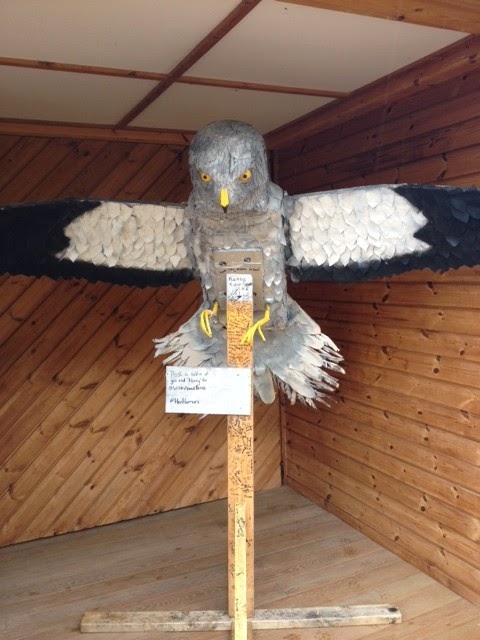
There is also a giant hen harrier spending the winter over at Burton Mere Wetlands. Harry is a six-foot male hen harrier, created by local young nature enthusiast Findlay Wilde. The large-scale model bird has been touring the country to raise awareness about hen harrier conservation. This year, it has made appearances at Hen Harrier Day in the Peak District, Bird Fair in Rutland and mostly recently, on BBC Autumnwatch at RSPB Leighton Moss in Lancashire.

Skydancers on the Dee is on Sunday 30 November from noon until dusk, at the “Donkey Stand” on The Parade in Parkgate. There are further events on 21 December 2014, 25 January 2015, 22 February and 29 March. All events are free and visitors can drop in any time. 

Skydancers on the Dee is part of Skydancer, a four-year RSPB project aimed at protecting and conserving nesting hen harriers in the English uplands. The project is funded by the Heritage Lottery Fund and United Utilities with additional support from the Forestry Commission. For more information, visit www.rspb.org.uk/skydancer. 


Sunday, 26 October 2014

Point of Ayr - a Sunday outing


Eventually got out today with my camera with Rhodie to the Point of Ayr .. nice and mild winds, good variety of birds managed to get some clear shots of them - Neil

The RSPB’s Point of Ayr reserve at Talacre is on the north-west corner of the Dee Estuary, a relatively small area comprising sand flats, mud banks, saltmarsh, scrub, sand dunes and fresh water pools. It therefore attracts a very good range of estuary birds. Being next to the Irish Sea it is also favoured by seawatchers, often being the first landfall for migrating birds crossing over from the North West coast of England. 

The scrub ,wildflower meadows and sand dunes are
good for skylarks, meadowpipits, wheatear, stonechats and warblers.


In winter thousands of waders and wildfowl  gather on the mudflats including  greylag, dunlin, redshank, godwit, curlew, knot, and sanderling.  When the tide rises, the birds are forced onto the nearby marshes. The carefully positioned open backed  hide gives close views of the feeding birds.


There is a 75 mile (1 km) seawall path. Wide, level and surfaced - the seawall is accessible to wheelchairs/pushchairs. The hide is 0.75 mile (1 km) from reserve entrance.  One fixed bench without back.


Previous blog on area:

http://liverpoolrspb.blogspot.co.uk/2013/06/little-terns-at-gronant.html