Saturday, 5 October 2013


             LEASOWE.

 After our RSPB group trip to Hungary it was back to a bit of local birding. I'm sure Lowra (sic) will be posting a report on our fantastic trip very soon......watch this space.

A turtle dove is a very rare bird in the north west, so it was great to catch up with one over at Leasowe, present for the second day,


with the collared doves as you cross over the bridge on Lingham lane.

Also present in the horse paddocks were 2 wheatear, 1 whinchat.

Chiffchaff still around but no sign of YBW.

Sparrowhawk patrolling the edges of the fields where plenty of goldfinch, linnets, meadow pipits and pied wagtails.


Sean.

Sunday, 29 September 2013

Trip to Poznan

My second trip to Poland this year, Poznan, was my next eastern European destination. I had already researched nature reserves within the Weilkopolski region. The closest was only about 15 minutes walk, even less when I found a short cut, Rusalka lake is a wonderful peaceful area at least when I was there, and I read a soap opera is filmed there occasionally. The lake is surrounded by tall trees, with the lake being 367,000 square metres, built in the 1940’s as a result of the damming of the Bogdanka River.

Immediately entering the wooded area I saw nuthatch and greater spotted woodpeckers, great, blue and long tailed tit, treecreeper, blackbird, song thrush and nightingale. The corvids were plentiful with hooded crow, jackdaw, magpie, rook and jays. There were a few red squirrels, always nice to see. The lake was quiet with only mallards and black headed gulls. I was a bit late putting on my insect repellent spray and was bitten on my forehead, part of the course for me.

I settled in my hotel just a short distance from the airport, which does have its advantages.  I discovered very soon the main road where I was staying, was on the flight path approaching the airport. The planes were so close I thought I saw the pilot waving at me.

The next day after a stroll round Lake Rusalka, I ventured to Lake Malta, which is just the most delightful place that offers so much for everyone, there is an adventure playground, artificial  ski slope, outdoor and indoor ten pin bowling. There is water sports, canoeing, a small tourist railway. The list is endless. The reason I was there, of course, was for none of that and it was pleasant to walk round the lake, with mallards, coots, moorhens, great crested grebe and cormorants spotted. The large wooded area, I spotted the usual woodland birds, and some marsh tits, the highlight.

The next day, Monday morning, I did not have the best of starts, and I am yet to fully get to grips with the Polish bus ticketing system. I found a kiosk and wanted to ask for some tickets. The hatch was about the size of a postage stamp and fit for people of about 3 foot tall. The Polish woman was 2 days short of her 90th birthday, with no teeth and wearing clothes passed down from her great grandmother. She didn’t speak any English and in the pouring rain I asked for the bus tickets.  I did my hardest using the best sign language I could, like pointing at the bus I had just missed. I am not sure how but she gave me three 15 minute tickets, that allows you to travel for 15 minutes. As it was the rush hour, 15 minutes doesn’t get you very far. My morning was getting worse as my intention was to travel to the train station, I had got on the wrong bus. I alighted after a few stops, now further away from the train station than before.

I eventually made it to the train station for my destination at Weilkopolski National park about 15 km south of Poznan. After the first stop a class of six year olds, with teacher, filled the carriage. Poland’s answer to Dennis the menace sat next to me. The teacher, exasperated no doubt, was “ssshhhhhhing” him every 30 seconds. The park is about 78 sq km with a town called Puszczykowo in the centre, with the Warta river running through. I strolled through a small part of the park, passing the odd cyclist, jogger and snake. 
Lake Warta


Amongst the usual woodland birds, I saw middle spotted woodpecker, and crested tits in the tall pine trees. There were many martins and swallows migrating high up. I made my way back to the train station and having found the ticket office it had all the shutters down. I must have to pay on the train, I thought. No one approached me on the train, and arriving in Poznan Glowny I was preparing my defence for being ticketless, walking along the platform with the many passengers towards the station concourse. There was no Inspector and I was relieved.
Middle spotted woodpecker

I had an evening flight on my last day and my hotel kindly allowed me to leave my luggage to pick up later, to save having to carry it around. I went to my favourite haunt at Lake Rusalka. Two students were surprised when I told them I was a tourist. “Not many tourists come here”. She said. She seemed pleased when I told them the purpose of my visit. She told me what birds she had just seen and I gave the English name for them. 

Later I went to the Botanical gardens. I have never seen so many jays. Fieldfares were a sign that autumn was here, lots of woodpeckers too. I spent the afternoon in Poznan and casually made my way to the hotel to collect my luggage. I still had one 15 minute bus ticket that Great Aunt Anastasia had sold me the other day. I validated my ticket and as I sat down, a Polishman starting talking to me. I told him where I was from and in broken English he asked me whether I had a ticket. Thinking he was a ticket Inspector, as he had a blue shirt, a bag and looked official I showed him.

“No”, he said, “another ticket”

My reaction was maybe the ticket wouldn’t get me to the airport in 15 minutes and I would have to purchase another. I searched in my pockets looking for some loose change. Captain Czeslaw looked at me and said, “no, want buy ticket “. He wasn’t an Inspector after all. He left after a few stops, without having bought a ticket from anyone else. I am not the only one it seems.

My drama was not yet over, as I was searched and my bags emptied at customs. Memories of Lublin again, but this time no smiles.

My lesson from this break was, learn to speak Polish.

Rob

Friday, 13 September 2013

                                   MED GULLS.

 Fri 13th Sept.         2 adult winter plumage Mediterranean  gulls with black headed gulls on Otterspool Prom...6pm .  Not great photos but a bit murky.      
                          Sean.

PS  Gales coming Sun, Mon........should be good for seawatching Wirral shore......Leachs petrels etc


Thursday, 5 September 2013

Not quite Rutland , but hey it's a lot closer!

Martin Mere - Sunset over Swan Lake


Looks like a good way to spend to the weekend!?, unless you dislike crowds that is.


North West Bird Watching Festival at the Martin Mere Wetland Centre on Saturday 23 and Sunday 24 November


There are a number of exciting new attractions at this years event:

Join London Camera Exchange as they attend this event for the first time to provide advice on cameras and digi-scoping as well as selling products .  More manufacturers than ever before with in focus, Nikon, Swarovski, Marchwood, Forest Optics, Minox and Viewpoint Optics coming along to display and sell optical equipment. Experts will be on site to offer any advice and guidance you may need.

Free photography workshops
Free bird Identification workshops  
Free ringing demonstrations to allow you to get close to wildlife
Free owl pellet dissection workshops 
Selection of free walks and talks as well as guided boat tours 

Free guest speakers: David Lindo, Urban Birder will be in attendance as a guest speaker along with Jeff Clarke from RSPB, award winning author Dominic Couzens talking about mammal watching in Britain and WWT s Kane Brides talking about the Red-breasted geese ringing project.
Watch the bird feed on the mere and get great photograph opportunities at 3pm and 3.30pm as up to 1500 Whooper Swans fly in.  
Early access to the reserve from 8am with a full English breakfast being served from the café

** check brochures as some of these events have to be pre-booked.
*** Admission charge if not member  http://www.wwt.org.uk/visit/martin-mere/plan-your-visit/

WWT Martin Mere Wetland Centre

Fish Lane, Burscough, Lancashire L40 0TA

Sunday, 18 August 2013

Take a walk into the darkness at RSPB Burton Mere Wetlands

Badgers - Laura Bimson

As dusk falls over RSPB Burton Mere Wetlands, the nature reserve comes alive   and this month, visitors have the chance to uncover the site's secret wildlife on a special dusk walk.

With the help of RSPB wardens, visitors can discover the nocturnal creatures which make their home at the reserve, including bats, badgers and owls.  
There will also be the opportunity to witness a wildlife spectacle at Burton Mere Wetlands, which is home to one of the UK s largest colonies of little egrets. As dusk approaches, close to 400 of the birds   a new
record for the reserve   gather from across the estuary, creating a remarkable sight. Dan Trotman, Visitor Development Officer at RSPB Dee Estuary Reserves, said:  Whilst these birds are seen regularly feeding across the estuary s saltmarsh during the day, nothing compares to the sight and sound of dozens flying together into the tree-tops next to the nature reserve for the night. It s an amazing sight to watch.

As darkness looms, the first of the reserve s nocturnal residents emerge   the bats. Burton Mere Wetlands is home to several types of bat and visitors can get up close to one type known as the water bat, as they zip back and forth catching flies over the water, just inches from the footpath. During the special dusk walk, visitors will also have the chance to venture into the Gorse Covert woodland, listen to the tawny owls calling to each other and hopefully catch a glimpse of young badgers foraging in the woods as twilight falls.

Geoff Robinson, Asst Warden for RSPB Dee Estuary Reserves, said: There have been evenings when I 've been here alone and seeing the little egret colony in all its glory makes all the hard work we' ve put into managing this wetland over the years seem all the more worthwhile.  The bats are superb - you can end up with them swirling all around you, just inches away. The badgers are brilliant to watch too. They have lived at Burton Mere Wetlands for years, but their home is now protected as it sits within RSPB land. 
The walk is a great way to experience the reserve after dusk. I don' t think people appreciate how much goes on here after the sun goes down  it really is worth discovering.

In a bid to enable people to experience as much of the evening activity on the reserve as possible, the guided Dusk Walk will be held on Friday 30 August, starting at 6.30pm. The cost for the walk is  £5 per adult ( 3 for RSPB members) and  £1 per child (free for RSPB Wildlife Explorer members). 
For more information on the reserve and its activities, please call the reserve on 0151 353 8478, or check out the website www.rspb.org.uk/deeestuary.

Juvenile Tawny owl. Andy Hay
 
Burton Mere Wetlands is the gateway to the RSPB s Dee Estuary nature reserve, with one of the newest visitor facilities in the country.   From the comfort of the reception building, visitors can see nesting avocets and lapwings in the summer and huge flocks of ducks, geese and swans in winter.  Water voles and badgers are resident here, whilst the summer months are alive with flickering colours from the countless dragonflies and butterflies.


Location and opening times:
RSPB Burton Mere Wetlands, Puddington Lane, Burton, Cheshire, CH64 5SF.  The reserve is open daily (except Christmas Day) from 9am to 5pm  from November to March, and 9am to dusk from April to October.  The reception building is open from 9.30am to 5pm year-round.

RSPB raises fracking fears for Lancashire wildlife

Whooper swan   Ben Hall rspb images

The RSPB is issuing its first objections to fracking proposals over concerns that the controversial drilling technique will harmwildlife and the climate.

The charity has lodged a letter of objection with Lancashire CountyCouncil to a proposal by Cuadrilla at Singleton near Blackpool inLancashire. The drilling site is close to an internationally important
protected area for pink footed geese and whooper swans and could causedisturbance to the birds.
The RSPB is also officially objecting to the contentious drillingproposal at Balcombe in Sussex on the grounds that no Environmental Impact Assessment has been carried out, and on climate change grounds.
Harry Huyton, RSPB head of climate and energy policy, said:  Many people are rightly concerned about the impact this new technology willhave on their countryside. These are not just nimbys worried about
house prices   there is a very real public disquiet about fracking. We have looked closely at the regulation in place to police drillingfor shale gas, and it is simply not robust enough to ensure that ourwater, our landscapes and our wildlife is safe.

Cuadrilla boss and former energy secretary Lord Howell claims thatwhen he made his much publicised howler about fracking the  desolateNorth East  he actually meant the North West. Singleton in Lancashire
is right in the heart of the North West and is on the doorstep of anarea which is home to thousands of geese and swans who will arrive fromas far away as Siberia to roost and feed next month and stay for the
winter. This area is protected by European law because it is so valuable forwildlife and Cuadrilla has done nothing to investigate what damagetheir activities could do to it.

The RSPB has called on Lancashire County Council to ensure Cuadrillahas carried out a full Environmental Impact Assessment before it goesahead with any work. The charity has also joined with other wildlife
and environment groups to call on the Government to rethink its shalegas policies.
Mr Huyton added:  Government figures show that in the north of Englandthere is potential for 5,000 sites and a total of up to 100,000 wells. The idea that these will have a benign impact on the countryside is
very difficult to believe. Fracking is cutting edge-technology and we really have no idea what
the impact will be on our wildlife. We do know, however, tha tconcentrating our resources on extracting fossil fuel from the ground instead of investing in renewable energy threatens to undermine our

commitment to avoiding dangerous levels of climate change. 

The RSPB is the UK s largest nature conservation charity, inspiringeveryone to give nature a home. Together with our partners, we protectthreatened birds and wildlife so our towns, coast and countryside will
teem with life once again. We play a leading role in BirdLifeInternational, a worldwide partnership of nature conservation organisations.

Thursday, 15 August 2013

DIGISCOPING.    15th Aug 2013.

Had a go at digiscoping with new scope today. Visited Martin Mere WWT and then dropped in to see tern roost at Ainsdale beach on way home.

Hope you like the pictures.......Sean.


                          Green Sandpiper.


                          Marsh Harrier.


                          Little Egret.


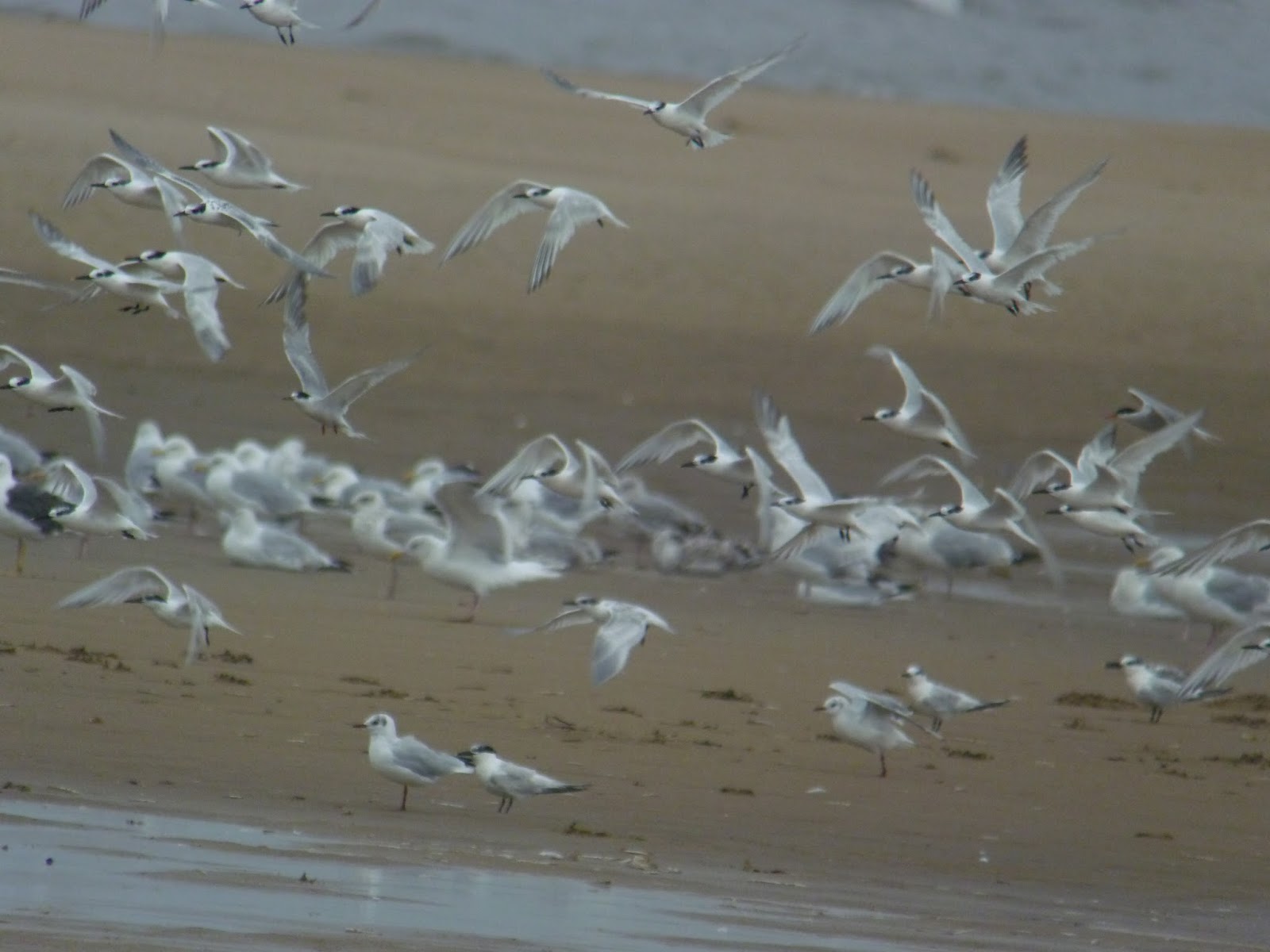
       Sandwich Terns....195.   and about 20 Common Terns.