Monday, 11 March 2013

Vilnius trip


I arrived early morning at Liverpool John Lennon airport to be greeted by an apprentice airport announcer who perhaps needs to work on his pronunciation a bit. I guess it wouldn’t be too much of a problem with Vilnius. The flight was about half an hour late and we were spared the fanfare that usually sounds when a Ryanair plane lands boasting of their 90%+ flights that do arrive on time. I checked in at my hotel and the girl at the desk looked a bit worried when I told her who I was after an earlier error with the booking, but no problems.
I managed a 3 hour bird watching stint before dusk. The temperature was about -6 and the main paths were mainly clear but some of the minor ones were like toboggan runs.   I went to Vingis park, alongside the River Neris that runs through Vilnius. Here I saw great spotted woodpecker, nuthatch, marsh, great, blue and long tailed tits. Also goldcrest, siskin and greenfinch. The corvids were plentiful with hooded crows, rooks and jackdaws about. The park covers over 400 acres and inside is a huge amphitheatre, and masses of tall trees. There was lots of floating chunks of ice flowing with the river current, and managed to see goosanders, goldeneyes and mallards. One drake goldeneye was displaying in that cold water, but the white eyed female wasn’t interested.

At breakfast next day I was greeted by a bored looking and unsmiling breakfast waitress. Breakfast was, well, not an English one. Later I went to Kaunas, about 90 kilometres west of Vilnius, and was thrilled to see two black redstarts from the train window, without binoculars, just as we were pulling out of a station. These trains were NOT HS2 or equivalent. I only did a couple of hours birding, but did see 6 species of corvid, siskin, hawfinch, greenfinch and lots of bullfinch. Also great and blue tits in masses, great spotted woodpeckers drumming away and the lighter coloured nuthatches. I spent the afternoon at Kaunas market and the whole town and surrounding areas must have turned up because there were thousands there. There were rows of markets, four a breast stretching for over a mile down the main street. There was dancing, singing and plenty of ale flowing. I enjoyed a Lithuanian version of the birdie song. I spotted a painting of a tern and fell in love with it, and at 65 litas, about sixteen pounds, I thought was a bargain. I was faced with a dilemma of how to get past Ryanair’s weight restriction on the flight home.

At breakfast next day a guest at the hotel decided to fill up his flask from the coffee dispenser, which judging from the face of miserable Miriam I don’t think was allowed. I didn’t know the Lithuanian translation to tell him the coffee was cold anyway. I went into Vilnius for a morning's birding and the overnight temperature had plummeted to about -10 and with a wind chill factor of -20, it was cold, cold and cold. I had trouble staying on my feet and felt a bit like Emile Heskey in a derby match. I saw much of the woodland birds of the first day, and again saw lots of bullfinches and right in the centre of Vilnius. The highlight was a lesser spotted woodpecker.
On the last day my flight was at midday and had a couple of hours in Vingis Park. In heavy snow I wondered whether I would see anything at all, but it did lighten a little. I was surprised by how quiet it was and the roads were deserted. I saw in the park, marsh, willow, blue, great and, the best of all, crested tits on the feeders. I seem to get the best at the end. I was informed by nervous Nerys as I checked out that it was a day of celebration, when 23 years earlier Lithuania became free from their big brother.

I went back to the airport having solved my weight problem by carrying my binoculars in my multi pocketed coat, with deep pockets. (Some say I have short arms).  I needn’t have worried about the weight because the case wasn’t weighed. I arrived back in Liverpool with the fanfare.

Rob

Monday, 4 March 2013


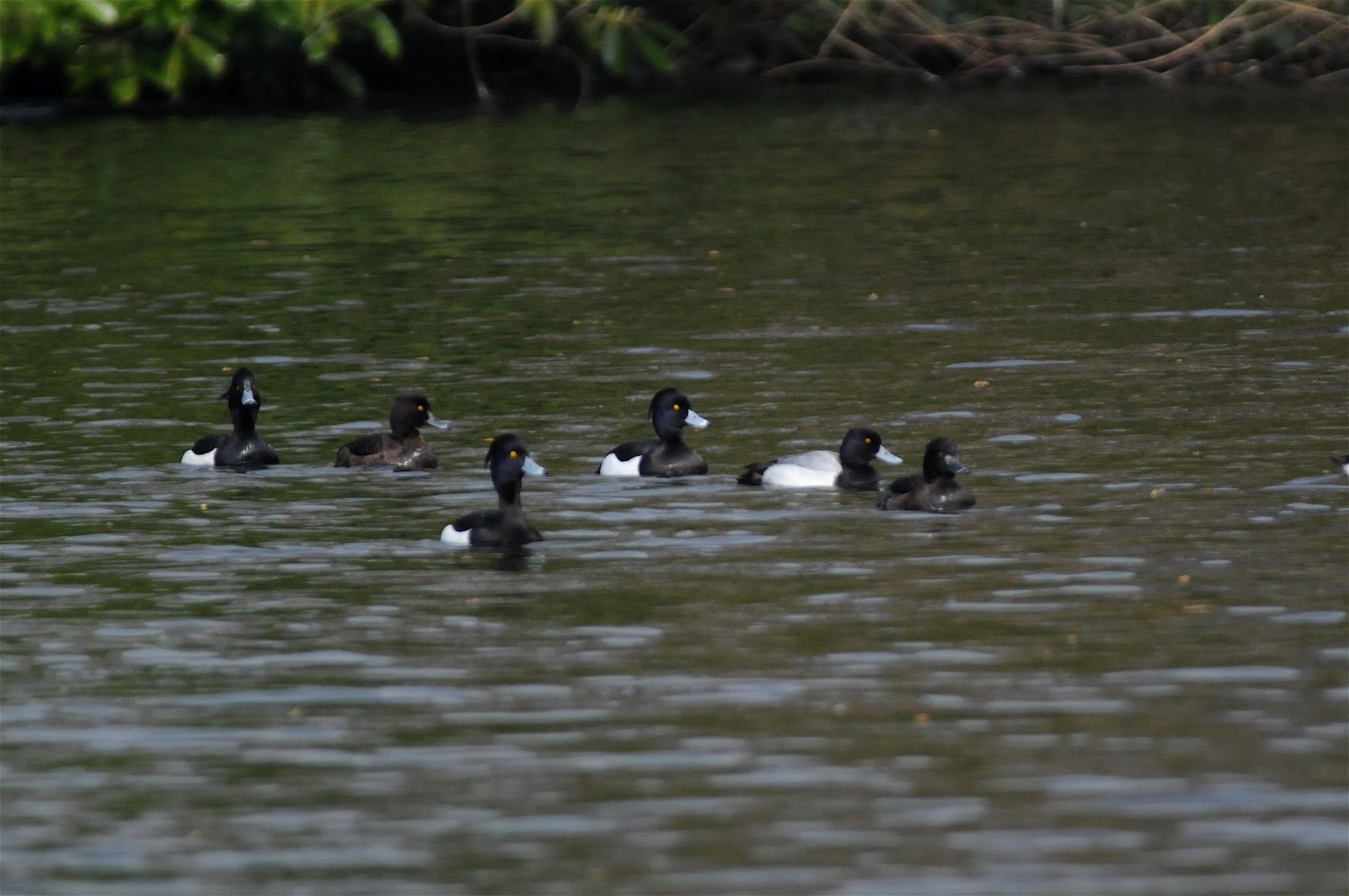
                     LESSER  SCAUP.                Burton Mere wetlands.


Sun 3rd March.

Sunday saw me trudging up forest tracks in Clocaenog Forest in search of great grey shrike. Got to
 summit near radio mast, very cold and windy, spent an hour at the top but no sign of the shrike at all. A couple of ravens displaying overhead and a nice group of 4 bullfinches, but very little else. I will have to go back on a nicer day, as fantastic 360 views from the summit.

Feeling a bit fed up decide to stop in at Burton Mere wetlands on the way back.

Could not believe my luck, as I showed my membership card I was asked if I had come to see the Lesser Scaup! She explained that it was on the fishing pools with half a dozen tufties. Great views and managed a few pictures. If you want to see some better photos have a look at " A Wirral birders blog", fantastic pictures by Phil Woolen showing all the tricky identification, ie wing bars etc. A great blog.

Also had good views of water rail right next to visitor centre windows feeding with coots and moorhen.


Sean.

Saturday, 2 March 2013

From shy to spry; March males are all-singing, all-dancing


From shy to spry; March males are all-singing, all-dancing


Brits aren’t known for making a song and dance about things, but that’s not so for our wildlife, which is emerging from the chilly winter this month to be at its loudest and most flamboyant.

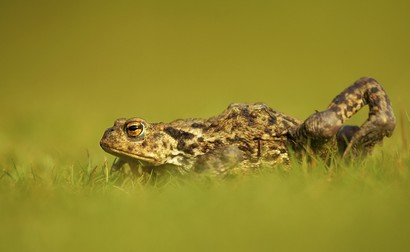
Male birds are at their most colourful right now, the way they moult and the brighter spring days mean their plumage appears more vivid and their patterns and markings are more obvious. Many male songbirds – robins, blackbirds and song thrushes among them - are competing to sing the loudest and longest, all in an effort to attract a mate for the start of the breeding season.  Common frogs and toads are joining the cacophony too, croaking to attract a partner. 

Ian Hayward, RSPB Wildlife Advisor, said: “It’s a fever of activity in our gardens and parks at the moment.  Birds are displaying brighter plumage, we’ve already received reports of frogspawn in some garden ponds and a few warm days will bring more colourful flashes of bees and butterflies zipping through the air.  This chorus of singing, buzzing and croaking is almost a sensory overload, but of course there’s real purpose behind it; it’s all geared towards pairing up and mating.”

Away from gardens, hares are active and indulging in their classic spring ‘boxing’ behaviour.  Once thought to be males boxing each other to win a female, it’s now known that boxing is actually the female hare fighting off the male’s attentions.  Meanwhile, paired-up great crested grebes are performing their elegant spring mating ‘dance’ mirroring each other’s movements on the water to help them bond ahead of breeding.

Ian continues; “The males of the wildlife World will be pulling out all the stops this month to bag a partner to breed with.  It’s a fascinating time to be outdoors experiencing these often shy creatures dancing and singing for all they’re worth, showing off their best moves. Other species like hedgehogs, grass snakes, and even some bat species are popping out of hibernation right now too.”

To help make a home for nature in your garden this spring, visit www.rspb.org.uk/hfw or get close to spring wildlife at one of the RSPB’s Date with Nature events www.rspb.org.uk/datewithnature


Friday, 1 March 2013

Berlin trip


I tried a birding few days in Berlin but unfortunately forgot my camera so just had my mobile. After studying  the labyrinth of tunnels of the U-bahn, S-bahn, railways and trams. I worked out a plan from my base near Wittenbergplatz U-bahn.

Must try google translate


First stop was Karow pools and Buch in the north east of the city. Karower Teiche nature reserve is well maintained and there are four reed fringed  ponds with good viewing platforms but not much good when I was there because the ponds were mostly iced over. I did see two great white egrets with mute swan, greylag, coots and mallards. There is good surrounding habitat with scattered bushes and small patches of woodland. The first bird I saw was a “tick” a short toed treecreeper, and checked the guide to make sure it wasn’t the common treecreeper, and there were plenty of them. Saw lots of greenfinch, chaffinch, siskin, yellowhammer, great tits, blue tits, marsh tits and the white headed long tailed tits. Also great spotted woodpeckers, nuthatches, jays and hooded crows. Having read Sean’s blog I checked the goldcrest, but no firecrest. I spent the afternoon at Bucher Forst, with a good number of mature trees and small ponds (iced over). This place will definitely be worth exploring later in the year. Saw much the same here birdwise and lots of drumming in the tall trees. Did see a middle spotted ‘pecker.

Next day was Krummer lanke in the south west of Berlin, here there are lakes, forests and woodland swamps and this place was just made for woodpeckers. The lakes were iced over again and the paths were very slippery, luckily no mishaps. Here I saw the Black woodpecker, middle spotted, lesser spotted and the great spotted, and the usual woodland birds I had seen the day before. There were about 40 mandarins in a stream that was flowing, always a nice sight. The afternoon I walked to Gunewaldsee further up, where I encountered many dog walkers. There were bird feeders here and middle spotted woodpeckers made an appearance in between the barking dogs.

Mandarins on the log


I tried the Tegel region in the North west the following day, next to the business airport. I first went to Flughafensee, there were large forest areas and a large lake, not all iced over. I made my way to the raised platform and hoped to see masses of wildfowl. Not in luck. I spoke with a German birder who told me they had mostly moved north closer to the sea. I was pleased he spoke English! I did see a bittern and cormorants in breeding plumage. My new German friend told me I was better going to Tegelersee. A couple of stops further on. I then had a long walk through the forest, and hoped it was worth it as the paths were getting muddy as the ice was melting slowly. I managed to see some wildfowl at last. Tufties, goldeneye, mallard and goosanders were about it. Oh, and hundreds of coots. I was amused to see a “sounder” of wild boar. I made my way back with sore legs and neck after looking up to see what ‘peckers were drumming. I counted at least 50, all great spotted, when I could spot them. I was hoping to see crested tits in the tall pine trees but not today.

My last morning I spent in the Tiergarten near Brandenburg, and arrived later than planned as I misread the map and travelled on the U-bahn rather than the S-bahn. When I did get there I was pleased because I recognised the wide roads and the Siegessäule victory statue from 20 years earlier when I ran the Berlin marathon. In the park there were plenty of finches, blackbirds and members of the tit family, great spotted (of course) and nuthatches. Also saw a red squirrel. The best, the last I saw and  a “tick” was a goshawk, that breed in the Tiergarten,  a wonderful bird, perched high up in the trees and calling. It must be the breeding season.

Not taken on my mobile!


I made my way back to the airport early, not wanting to take the wrong train again.

Rob

RSPB celebrates funding boost for saltmarsh restoration

Viewing platform - Hesketh Out Marsh


Great News for RSPB Hesketh Out Marsh nature reserve


Rare lagoon habitats could soon be created at RSPB Hesketh Out Marsh thanks to a funding boost of  £48,786 from The Veolia Environmental Trust.

The reserve, near Southport, will use the funding to carry out saltmarsh restoration work, which will involve enhancing the lagoons to hold water at low tide. Such coastal lagoons are one of the UK s rarest
habitats and the work will increase the diversity of the wildlife populations in the area. In addition, habitat  refuges  will be created, in the form of ridges and bunds, to provide elevated areas at high tide.

The project will also deliver a comprehensive monitoring programme, which will document the plants and animals that are found on site and monitor the changes as they take place.

Tony Baker, RSPB Ribble Sites Manager, said:  We are extremely grateful for the generous donation from The Veolia Environmental Trust and the work it will enable us to do at RSPB Hesketh Out Marsh.

As part of the project, RSPB reserve staff and volunteers will also be involved in monitoring wintering and breeding bird populations on site.

The Executive Director of The Veolia Environmental Trust, McNabb Laurie, said:  Saline lagoons such as this are critically important for a number of specialised species and habitats, as well as having a
significant role in flood control. I m so glad The Veolia Environmental Trust is able to support the RSPB's work to enhance the Hesketh Out  Marsh reserve for wildlife and the visiting public. 


:-) Laura


Sunday, 24 February 2013

                                          FIRECREST.


North Wales revisited.............started day at Flint Castle, flock of birds on salt marsh, flew up onto castle walls. Good views thru scope.....54 twite.

Next stop Kimnel Bay.......walked along towards viewing platform, met ringing group who had just cannon netted over 100 sanderlings and ringed plover.Spent some time watching ringing, weighing then on about 100yds to see snow buntings, 9 birds on beach, only 20yds away at one stage.

Llandulas.............much too choppy to pick anything unusual out of scoter flock offshore, 1 red throated diver and lots of great crested grebes.

Time for coffee and cake at Conway RSPB..........no sign of firecrest.

Llanbedr church..........no sign of hawfinch.
Caerhun.............no sign of hawfinch.
2 red kite, 2 raven, 1 peregrine, buzzard.......in Conway valley.

Last stop......sewage works at Morfa Madryn.   First bird as soon as I got out of car.....a crest.....but just a goldcrest. Also treecreeper, long tailed tit and great spotted woodpecker. Then more goldcrests, and then low in hedge right next to gates to sewage works.......a stunner........a FIRECREST......a lifer for me and what a great little bird. Really bright compared to goldcrests which were feeding with it. Big white eye stripe and very bright on shoulders, possibly a male. Even managed to get a picture, but as you can see, not great, but it was quite gloomy and the firecrest was very mobile. Watched it for about 15 min, came as close as 10 yds.


Sean.

Saturday, 23 February 2013

Hawfinches

Hawfinch at Sizergh 2012 -Phil Tomkinson
There you  go Sean, wonder if he's still there? (Taken by Birder Phil last year, very large camera!)

http://www.nationaltrust.org.uk/sizergh/                                       Laura